





Igbo Culture & Heritage
Igbo Mask Making: A Powerful Tradition and Craft

Igbo mask making is a traditional Igbo cultural art rooted in masquerade practices, ancestral heritage, and skilled craftsmanship that connects communities, spirituality, and performance traditions in southeastern Nigeria.

Igbo mask making is more than carving wood into striking forms. In many Igbo communities, it is at the heart of masquerade culture where mmonwu performances bring history, belief, and community memory into public view. A mask is never just an object here. It carries meaning, often tied to ancestors, moral teaching, and the rhythm of festivals that mark the seasons of village life.
From quiet workshops where artisans work with simple hand tools to lively festival grounds filled with drumming and movement, Igbo mask making moves between stillness and performance. Each carved piece is part of a wider tradition that combines craftsmanship with cultural identity. Over time, these masks have come to represent more than artistry. They hold stories, values, and a sense of belonging that communities continue to recognize and protect.
This article takes you into that world, exploring Igbo mask making through its cultural meaning, craftsmanship, and ancestral heritage, while showing how this tradition continues to evolve in today’s Igbo society.
Historical Origins of Igbo Mask Making
The history of Igbo mask making is closely tied to the long-standing masquerade tradition found across Igbo communities in southeastern Nigeria. Rather than existing as a separate craft on its own, Igbo mask making developed as part of a broader cultural and spiritual system known as mmonwu where masked performances play important roles in public life.
In traditional Igbo society, masquerades have been present for generations as part of festivals, rites of passage, and community ceremonies. These masked performances were not created for entertainment alone. They were deeply connected to beliefs about ancestors, the spirit world, and the moral order of society. Masks were crafted as visible forms used during these performances, giving physical expression to invisible forces believed to move among the living during ceremonial occasions.
Across different Igbo communities, the emergence of mask making was shaped by local traditions and oral history. Knowledge was passed down through apprenticeships where younger craftsmen learned directly from experienced carvers. This training was practical and gradual, built on observation, repetition, and hands-on practice rather than formal instruction.
Over time, specific styles of masks developed in different regions, each carrying unique meanings and design choices influenced by community values and spiritual beliefs. While some masks were associated with ancestral figures, others were linked to social control, seasonal festivals, or entertainment within the masquerade system.
Scholarly research on Igbo culture confirms that masquerade traditions have long functioned as part of social organization, helping to reinforce community norms and shared identity. Within this system, mask making became an essential craft that supported performances that brought people together during important cultural moments.
Today, even though the context has changed in many areas, the historical foundation of Igbo mask making remains clear. It is rooted in centuries of lived tradition, community knowledge, and a cultural worldview where art, spirituality, and social life are closely connected.
Understanding the Igbo Masquerade System
To understand Igbo mask making, you first need to understand the masquerade system it belongs to. In Igbo culture, this system is a long-standing tradition where masked figures appear during festivals, ceremonies, and important community events. These figures are not seen as ordinary performers alone. They are treated as representatives of spiritual and ancestral forces within the community space.
At the centre of mmonwu is the idea that the mask does not stand alone. It is part of a complete performance system that includes carved masks, elaborate costumes made from raffia or cloth, drumming, chanting, and carefully controlled movement. When all these elements come together, the masked figure becomes something the community engages with on both cultural and symbolic levels.
In many Igbo communities, the masquerade is understood as a temporary transformation of identity. The person wearing the mask steps out of everyday life and takes on a role that is shaped by tradition and communal expectation. Because of this, the identity of the performer is often hidden with the aim of allowing attention to focus on the role being played rather than the individual behind it.
The mmonwu system also serves different social purposes, depending on the type of masquerade involved. Some masquerades appear during major festivals such as the New Yam celebrations, while others are connected to rites of passage, funerals, or community enforcement of social rules. Each type carries its own meaning and level of restriction, often guided by local customs and community elders.
Masquerade traditions in Igboland contribute to social organization by supporting shared values and reinforcing acceptable behaviour within society. Through performance, storytelling, and symbolic action, mmonwu becomes a way for communities to express identity, preserve memory, and maintain continuity across generations.
Within this system, Igbo mask making plays a key role. The mask is not just decorative. It is a carefully crafted object that gives physical form to the ideas and beliefs expressed during masquerade performances.
Materials and Tools Used in Igbo Mask Making

Igbo mask making depends on materials that are drawn directly from the natural environment. These materials are chosen not only for availability but also for their durability, texture, and cultural suitability within masquerade traditions. Over time, artisans have refined their choices based on what works best for carving, decoration, and performance use.
Wood is the foundation of Igbo mask making. Skilled carvers select hardwoods that can withstand detailed carving and long use during masquerade performances. The choice of wood is important because it must be strong enough to hold fine facial features while remaining workable with hand tools.
After carving, masks are often finished with natural pigments. These may include white clay or chalk used for light tones and symbolic markings; charcoal or dark pigments for contrast and detailing; and camwood powder for reddish colouration commonly used in traditional decoration. These colours are applied carefully, and their use is often guided by cultural meaning as well as visual effect.
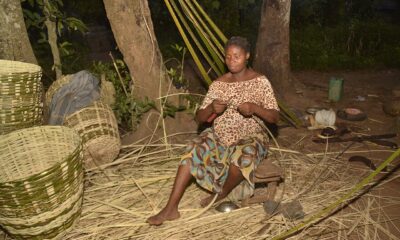
Masks are rarely used alone. They are usually part of a full masquerade costume. To achieve this, artisans incorporate raffia fibres for movement and texture, cloth materials for covering or extension, and beads or shells in some designs for added detail. These materials help to connect the mask to the larger performance identity of the masquerade.
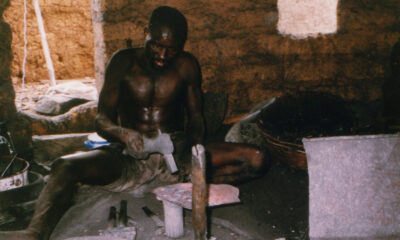
Igbo mask making relies on simple but effective hand tools like knives for rough shaping and cutting, chisels for carving deeper details, adzes for smoothing surfaces and forming structure, and scraping tools for refining edges and finishing work. These tools are typically used in apprenticeship settings where younger learners observe and assist experienced craftsmen over time.
Beyond physical tools and materials, one of the most important “resources” in Igbo mask making is knowledge itself. This knowledge is not usually written down. It is passed from master to apprentice through steady practice, observation, and correction. Over time, learners develop the skill needed to handle materials with precision and cultural understanding.
Together, these materials and tools form the foundation of Igbo mask making, and support a tradition where craftsmanship and cultural meaning are closely connected.
How Igbo Masks Are Made
Igbo mask making is a careful and patient process that develops over time. It is not rushed, and it is not treated as a casual activity. In many communities, it is learned through apprenticeship where young learners spend years observing and assisting experienced carvers before they are trusted to work independently.
The process usually begins with the selection of wood. The artisan chooses a piece that is strong, workable, and suitable for carving detailed facial features. Once selected, the wood is trimmed and prepared to remove rough edges or unwanted sections before carving begins.
This is followed by rough-carving the basic form. At this stage, the general outline of the mask is created. Using knives, chisels, or adzes, the carver removes large sections of wood to establish the basic structure. This step focuses on proportion and balance, ensuring the mask has a clear foundation before finer details are added.
After the basic form is established, attention shifts to detail work. The eyes, nose, mouth, and other features are carefully carved. This stage requires steady hands and experience as small adjustments can significantly affect the final expression of the mask.
Once the main features are complete, the surface is refined. Rough edges are smoothed out, and the overall structure is adjusted for consistency. This step helps to prepare the mask for decoration and ensures it is comfortable and suitable for use in performance settings.
After carving is complete, the mask is decorated using natural pigments and materials. White chalk, charcoal, and camwood may be applied to create contrast and visual identity. Some masks also include raffia, cloth, or beadwork, especially when they are intended for full masquerade costumes.
In most cases, the mask is not used alone. It becomes part of a larger masquerade outfit that includes body coverings made from raffia, fabric, or other materials. This full costume is what brings the masquerade character to life during performances.
The craftsmanship behind Igbo mask making is sustained through apprenticeship. Skills are passed from master to learner through direct practice rather than formal instruction. Over time, learners develop an understanding of both technique and cultural meaning which is essential for creating masks that are suitable for community use.
Through this process, Igbo mask making remains a living craft shaped by experience, tradition, and careful attention to detail.
Cultural Meaning and Symbolism of Igbo Masks
In Igbo mask making, the finished object is never just a carved piece of wood. It carries layers of meaning that are understood within the cultural life of the community. Each mask is created with intention, and its appearance, use, and performance context all contribute to what it represents.
Within many Igbo communities, masquerades are associated with the spirit world. The mask worn during mmonwu performances is often understood as a way of giving form to ancestral presence. Because of this belief, the masked figure is treated with a level of respect that goes beyond ordinary performance. The identity of the person inside the costume is concealed so that attention remains on the role being performed.
Igbo masks also communicate values that are important for community life. Through their appearance and performance, they may express ideas connected to respect for elders, moral behaviour and discipline, social responsibility, and community harmony. Different mask types are associated with different roles, and these roles help to guide how people are expected to behave within the society.
In Igbo mask making, the designs carved into masks are not random. Facial expressions, markings, and proportions are often chosen with meaning in mind. Some designs may appear calm and composed, while others are more dramatic or expressive, depending on the role the masquerade is expected to play.
Colours used in decoration also carry meaning in many communities. For example, white is often associated with purity or the spirit world, while darker tones may be linked to strength or seriousness. These meanings can vary from one community to another but they are generally understood within local cultural systems.
In Igbo mask making, each mask is tied to a specific masquerade identity. Some represent ancestral figures while others may represent community characters used for teaching or entertainment. Because of this, masks are not interchangeable. They are created for specific purposes and used within defined cultural contexts.
Beyond the symbolism, masks play a practical role in maintaining cultural memory. They appear during festivals, ceremonies, and gatherings where they help to reinforce shared identity and continuity. In this sense, Igbo mask making supports both artistic expression and community life.
Through these layers of meaning, Igbo masks remain important cultural objects that connect craftsmanship with belief systems and social experience.
The Role of Masks in Festivals and Rituals

In Igbo communities, masks are most visible during festivals and ritual gatherings where they come alive as part of mmonwu performances. These moments are not ordinary social events. They are carefully structured occasions that bring together music, dance, storytelling, and communal participation, with masked figures at the centre of attention.
One of the most important spaces for Igbo mask making traditions is the festival. Events such as the New Yam Festival (Iri Ji) often include masquerade appearances that add energy and meaning to the celebration. During these festivals, masked performers move through public spaces, accompanied by drumming and chants, creating a shared experience for the community. These performances are not only for entertainment. They also mark seasonal cycles, celebrate agricultural success, and strengthen community bonds.
Masks also appear in ritual contexts that carry deeper cultural significance. In some communities, masquerades are involved in funeral ceremonies, rites of passage, ancestral remembrance events, and community purification or cleansing practices. In these settings, the masked figure is treated with seriousness and respect. The performance is guided by tradition, and participation is often regulated by cultural norms.
Through movement, costume, and interaction with the audience, masquerades communicate stories and social lessons. Some performances are used to correct behaviour, encourage responsibility, or highlight community expectations. Instead of written texts, these lessons are shared through performance and observation.
While some masquerades are highly sacred, others are more playful and entertaining. These performances allow communities to relax, interact, and enjoy shared cultural expression. The balance between seriousness and entertainment is part of what makes the masquerade system dynamic and widely engaging.
Not every masquerade is open to everyone. Some performances are restricted based on tradition, with specific rules about who can approach, observe, or participate. These boundaries help to maintain respect for cultural practices and preserve the meaning attached to each mask and performance.
Through festivals and rituals, Igbo mask making remains active and visible. Each appearance of a masquerade connects present-day communities with long-standing traditions, keeping cultural memory alive through performance rather than written records. As such, masks are not static objects. They are part of living events that continue to shape and express Igbo cultural identity.
Spiritual and Ancestral Significance
In Igbo mask making, meaning goes far beyond craftsmanship or visual appeal. Masks are deeply tied to spiritual belief systems and ancestral connections that shape how communities understand life, death, and continuity. Within the masquerade tradition known as mmonwu, the mask is not treated as a simple object. It is seen as part of a sacred encounter between the living world and the unseen realm.
In many Igbo communities, masquerades are understood as manifestations of spiritual beings or ancestral forces. When a masked figure appears during a ceremony, it is often approached with caution and respect because it is believed to carry a presence that is not ordinary. This belief gives Igbo mask making a spiritual dimension that influences how masks are created, handled, and used.
An important idea in Igbo cosmology is that ancestors remain active within the community after death. They are not seen as distant or absent. Instead, they are believed to participate in the life of the living in various ways. Masks used in masquerade performances are sometimes linked to this understanding, serving as a visible form through which ancestral presence is acknowledged during important cultural events.
Because of these beliefs, there are often strict cultural guidelines surrounding masquerade performances. Certain masks may only be used at specific times or by designated groups. In some cases, only initiated individuals are allowed to handle or approach particular masquerades. These rules help to preserve the respect and seriousness attached to the tradition.
Elders and traditional custodians often play an important role in guiding masquerade activities. They help to determine when performances take place and ensure that cultural norms are followed. Their involvement reinforces the continuity of knowledge and the careful transmission of tradition from one generation to another.
Igbo mask making supports a system where the physical and spiritual worlds are closely linked. During performances, the mask becomes a medium through which these two realms are symbolically connected. The community engages with this experience through ritual, observation, and shared cultural understanding.
Even as society changes, the spiritual meaning attached to masks continues to influence how they are viewed in many communities. For some, they remain powerful cultural symbols tied to ancestry and identity. For others, they represent historical continuity and cultural heritage that should be preserved and respected.
Through these layers of belief and practice, Igbo mask making remains more than an art form. It is part of a worldview that connects people to their history, their ancestors, and their sense of belonging within the community.
Modern Influences and Changes in Igbo Mask Making
Igbo mask making has not remained the same over time. Like many traditional practices, it has been influenced by changes in religion, education, economy, and urban life. While the core ideas behind mmonwu performances still exist in many communities, the way masks are made, used, and understood has continued to shift.
One of the most significant changes affecting Igbo mask making is the spread of Christianity. In many areas, Christian teachings discouraged participation in traditional masquerade practices because of their spiritual associations. As a result, some communities reduced or completely stopped certain masquerade activities, especially those considered sacred or ritual-based.
However, this has not led to a complete disappearance of the tradition. In some places, masquerades have been reinterpreted as cultural heritage rather than spiritual practice, allowing performances to continue in a more symbolic form.
Urban growth has also affected Igbo mask making. As people move to cities for work and education, fewer individuals remain in rural areas where masquerade traditions are most active. This movement has reduced regular participation in festivals and made it more difficult for the younger generations to learn the craft through traditional apprenticeship systems.
Another major change is the growing demand for masks as art objects. Igbo masks are now often produced for sale in local and international art markets. In this context, masks may be made primarily for decoration or tourism rather than ritual use.
This shift has created new opportunities for artisans, but it has also changed how masks are valued. Instead of being seen mainly as cultural tools for performance, they are sometimes treated as collectible artworks or souvenirs.
Igbo masks have gained attention from museums, researchers, and cultural institutions around the world. They are studied as important examples of African artistic and cultural heritage. This recognition has helped to preserve knowledge about mask making, even as local practices evolve. At the same time, the removal of some masks from their original communities into museum collections has raised discussions about cultural ownership and preservation.
Modern artists continue to draw inspiration from traditional Igbo mask making. Some reinterpret mask designs in painting, sculpture, fashion, and digital art. These new forms allow elements of the tradition to reach wider audiences while adapting to modern creative spaces.
Today, Igbo mask making exists in a space between tradition and change. In some communities, it remains closely tied to festivals and cultural events. In others, it survives mainly through artistic representation or educational documentation. Despite these changes, the tradition continues to hold cultural importance. Its forms may evolve, but its connection to identity, memory, and heritage remains present in many ways.
Preservation and Revival of Igbo Mask Making
Igbo mask making continues to survive today because communities, educators, researchers, and cultural groups are making deliberate efforts to preserve it. While modern influences have changed how masquerade traditions are practiced, there is still a strong interest in keeping the knowledge, skills, and meaning of this heritage alive for future generations.
One of the most important ways Igbo mask making is being preserved is through cultural festivals. In many communities, masquerade events still take place during key celebrations such as harvest festivals and community gatherings. These festivals provide a space where younger people can see masquerades in action and observe how masks are used within performance settings. In these moments, tradition is not only remembered. It is experienced directly. This helps to maintain continuity between the older and younger generations.
Schools and cultural programmes are increasingly introducing students to indigenous arts, including mask making. Through cultural studies and history lessons, learners are exposed to the importance of Igbo traditional crafts and their role in community identity. This form of education helps to shift perception. Instead of seeing mask making as something distant or outdated, young people begin to understand it as part of their cultural heritage.
Academic researchers and cultural institutions have played a major role in documenting Igbo mask making. Through field studies, interviews, and written publications, they record information about carving techniques, masquerade meanings, and community practices.
Museums also preserve masks as cultural artifacts, ensuring that physical examples of the tradition remain available for study and public viewing. These efforts help to protect knowledge that might otherwise be lost over time.
Although fewer young people now enter traditional carving apprenticeships, the system still exists in some communities. Skilled artisans continue to train apprentices in mask carving and decoration, passing down knowledge through hands-on practice. This method of learning remains important because it preserves both technical skill and cultural understanding. It allows learners to engage directly with materials, tools, and traditional methods.
Igbo mask making is also finding new life through contemporary art. Artists, designers, and cultural practitioners are reinterpreting traditional mask forms in modern media such as sculpture, fashion, and visual design. These adaptations help to keep the tradition visible in new spaces while maintaining its cultural roots.
Preserving Igbo mask making is not only about maintaining objects. It is about sustaining the knowledge, stories, and values connected to them. Each mask carries meaning that connects craftsmanship with identity and history.
As interest in cultural heritage grows, there is renewed recognition of the importance of protecting traditional practices like Igbo mask making. Through education, performance, documentation, and creative adaptation, the tradition continues to find ways to remain relevant in a changing world.
Conclusion …
Igbo mask making remains one of the most enduring expressions of cultural identity in Igboland. It is not only a craft of carving wood or designing masks for performance. It is part of a wider tradition that connects people to history, community values, and ancestral memory through mmonwu culture.
Across generations, this practice has carried meaning in different ways. In festivals, it brings people together in celebration. In rituals, it holds deeper spiritual and cultural significance. In everyday community life, it continues to communicate values, identity, and continuity in ways that are understood within local traditions.
Even with modern influences, changing belief systems, and urban lifestyles, Igbo mask making has not disappeared. Instead, it has adapted. It now exists in multiple spaces at once, from rural festival grounds to museums, classrooms, and contemporary art studios. Each of these spaces contributes in its own way to keeping the tradition visible and relevant.
What stands out most is that Igbo mask making is not a static heritage. It is a living practice that depends on people, knowledge, and memory. As long as artisans continue to carve, communities continue to perform, and the younger generations continue to learn, the tradition will remain part of cultural life.
Preserving it, therefore, is not only about protecting objects. It is about sustaining the stories, skills, and meanings that give those objects life in the first place.
References
- Cole, H. M., & Aniakor, C. C. (1984). Igbo arts: Community and cosmos. University of California Press. https://www.ucpress.edu/book/9780520041982/igbo-arts
- Picton, J. (1990). African art: Masking traditions and sculpture.
British Museum research collections on African masks and carving traditions. https://www.britishmuseum.org/collection - Gleason, J. B. (1971). Masquerades and carving traditions in West Africa.
- Chukwu, C. C., & Attah, F. M. (2013). Masking tradition in the social life of the Igbo people: A study of Old Bende, Abia State, Nigeria. ResearchGate. https://www.researchgate.net/publication/354365085_Masking_Tradition_in_the_Social_Life_of_the_Igbo_People_A_Study_of_Old_Bende_Abia_State_Nigeria
- Isidienu, I. C., & Onyekelu, A. C. (2022). Instrument of stability: A study of masquerade in Igbo traditional society. ODIBENDI Journal of Igbo Consciousness. https://journals.unizik.edu.ng/index.php/odibendi/article/view/1373
You might want to check this out …