





Igbo Culture & Heritage
Igbo Bead Culture: The Fascinating History, Symbolism, and Craftsmanship of Traditional Beads

Igbo bead culture explores the history, symbolism, and craftsmanship of traditional beads in Igbo society, from ancient Igbo-Ukwu discoveries to modern ceremonial use and cultural identity.

Igbo bead culture is something you notice first with the eyes, but it is understood much deeper than that. In many Igbo communities, beads are not just ornaments. They are part of everyday tradition, used to show status, mark special occasions, and express identity without saying a word.
You see them on traditional rulers during ceremonies, on brides during marriage rites, and on dancers during festivals. Each one carries a meaning that people around already understand, even without explanation.
What makes Igbo bead culture even more interesting is its long history. The famous discoveries at Igbo-Ukwu show that beads were already in use in Igbo society many centuries ago. That means this practice is not new or borrowed recently. It has been part of life for a very long time.
Today, traditional bead craftsmanship in Igbo culture is still present, even if it looks a bit different from the past. Some people wear beads for fashion, others for tradition. But the meaning behind them is still respected in many communities.
Origins and Historical Background of Beads in Igbo Society
The story of beads in Igbo society goes back many centuries. It is not something that started in recent times or came in only through modern fashion. Evidence from archaeology and oral history shows that beads have long been part of Igbo life, used in trade, ceremony, and social identity.
One of the strongest pieces of evidence comes from the famous archaeological site at Igbo-Ukwu in present-day Anambra State. When excavations were carried out in the 1950s by archaeologist Thurstan Shaw, thousands of beads were discovered in burial and ritual contexts. These included glass beads, stone beads, and finely crafted ornamental pieces. The findings are dated to around the 9th century, thus showing that Igbo bead culture is more than a thousand years old.
These discoveries are important because they challenge older assumptions that complex artistic traditions in West Africa developed much later. The Igbo-Ukwu finds show that ancient Igbo communities were already skilled in working with imported and locally valued materials, including beads that likely came through early trade networks linking West Africa with North Africa and beyond.
Beads in this early period were not random decorations. They were closely tied to leadership, spirituality, and burial practices. The fact that they were placed in graves suggests that they held value beyond everyday use, possibly connected to beliefs about status in life and the journey after death.
As Igbo communities grew and developed different forms of social organization, the use of beads also expanded. They became more visible in leadership systems, traditional institutions, and ceremonial life. Over time, beads moved from being rare and elite items to becoming a recognizable part of cultural expression across many Igbo communities.
This long history helps to explain why Igbo bead culture still carries weight today. It is not just about appearance. It is tied to a deep cultural past that has survived through generations, even as society has changed.
Types of Traditional Beads in Igbo Culture
Igbo bead culture is not built around one single kind of bead. Over time, different types of beads have been used for different purposes. Some are linked to royalty, some to daily adornment, and others to specific ceremonies or stages of life. Each type carries its own meaning in Igbo society.
Coral Beads

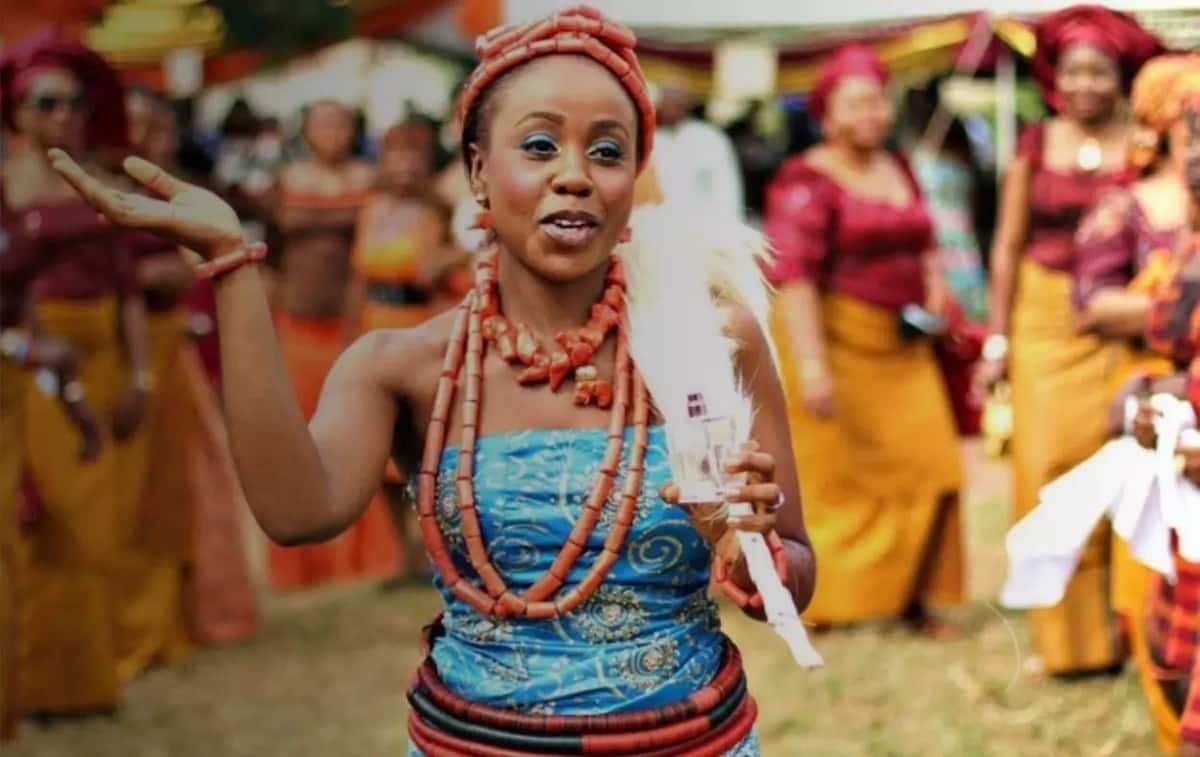
Coral beads are among the most respected in Igbo bead culture. They are often worn by traditional rulers, titled men, and people of high social standing. These beads are usually deep red or orange in colour and are seen during important ceremonies such as coronations and cultural festivals. In many communities, coral beads are associated with authority, dignity, and tradition.
Glass Beads
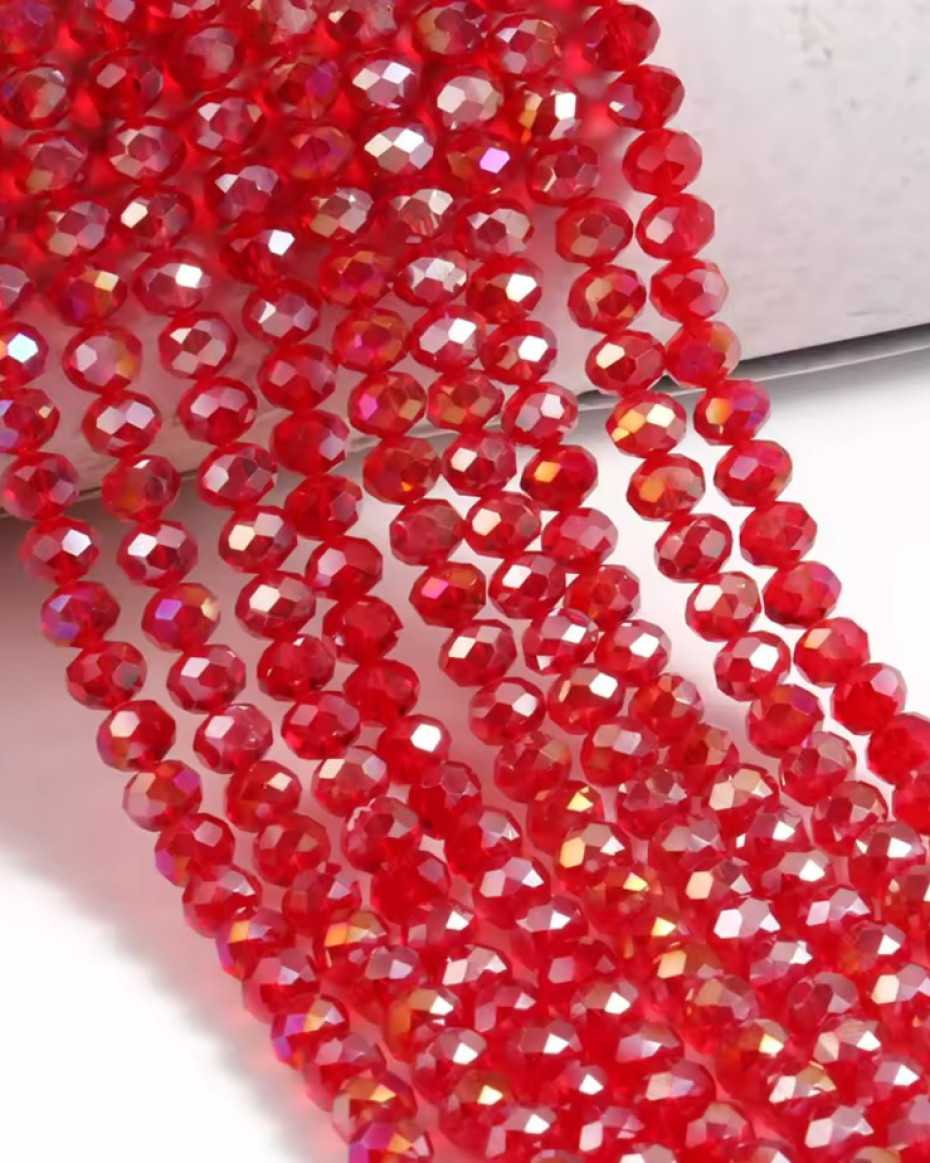
Glass beads have a long history in Igbo bead culture. Some were introduced through early trade networks, while others became locally available over time. They come in different colours and sizes and are used for necklaces, bracelets, and decorative patterns on traditional clothing. Glass beads are common in both ceremonial and everyday cultural dressing.
Stone and Natural Beads
These beads are made from natural materials such as stones, seeds, and shells. They are often simpler in design but still hold cultural value. In many cases, they are used for personal adornment and can be found in traditional jewelry worn during local ceremonies or community gatherings.
Waist Beads
Waist beads are especially associated with women in Igbo culture. They are worn around the waist and can carry different meanings, depending on the family or community. In some cases, they are linked to beauty, maturity, and womanhood. In others, they are used during traditional rites or personal milestones. Waist beads are often discreet but culturally meaningful.
Ceremonial Beads

Ceremonial beads are used specifically for cultural events such as marriages, title-taking ceremonies, festivals, and masquerade performances. These beads are not usually worn every day. Instead, they are brought out for special occasions where tradition is being honoured and displayed.
Each of these bead types contributes to the wider story of Igbo bead culture. Together, they show how beads are not just decorative items, but rather are part of how people express identity, respect tradition, and mark important moments in life.
Traditional Bead Craftsmanship and Ornamentation
In Igbo bead culture, beads are not only valued for what they are but also for how they are used. Craftsmanship here is less about manufacturing in a large industrial sense and more about careful selection, arrangement, and meaning in design.
Traditionally, beads are sorted by colour, size, and material before they are strung together. The way they are arranged is not random. Certain patterns are chosen for specific occasions while others are linked to status or cultural identity. A single necklace or waist chain can carry layers of meaning, depending on how it is made and who wears it.
Bead ornamentation is also closely connected to traditional attire. In many Igbo communities, clothing for ceremonies is not considered complete without beads. Wrappers, blouses, and traditional outfits are often paired with bead necklaces, bracelets, anklets, or waist beads. These additions are not just for beauty. They help to communicate respect for tradition and the importance of the occasion.
In royal and titled settings, bead arrangement becomes even more significant. Leaders and titled men often wear carefully designed coral bead regalia during ceremonies. These are not casual accessories. They are prepared with attention to cultural expectations and worn in ways that signal authority and responsibility within the community.
In Igbo bead culture, women also play an important role in bead ornamentation, especially with waist beads and decorative jewelry worn during marriage ceremonies and festivals. In many cases, older women guide the younger ones on how beads are chosen and worn, ensuring that cultural practices are passed on properly.
Across all these uses, what stands out is that craftsmanship in Igbo bead culture is not separated from life itself. It is part of how people prepare for events, present themselves in public, and connect with their heritage in a visible, everyday way.
Symbolism and Cultural Meaning of Beads
In Igbo bead culture, beads are never just about appearance. People read meaning into them the same way they would read a message. What is worn, how it is worn, and who is wearing it all carry information that others in the community understand.
One of the most common meanings attached to beads is status and respect. Coral beads, in particular, are widely associated with traditional authority. When a titled man or a traditional ruler appears in coral beads, it is a clear sign of leadership and recognition within the community. It tells people something about position without a single word being spoken.
Beads also carry cultural identity. In many Igbo communities, specific bead styles are linked to particular roles, age grades, or ceremonial groups. This helps people to identify where someone belongs during gatherings or festivals. It becomes a quiet but clear way of recognizing one another within the culture.
There is also a strong spiritual and ancestral meaning attached to beads in in Igbo bead culture. Certain beads are believed to be connected to protection or to the presence of the ancestors. They may be worn during rituals or important ceremonies where spiritual guidance is believed to be needed. In these moments, beads move beyond decoration into something more symbolic and sacred.
Another important meaning of bead in Igbo bead culture is seen in rites of passage. Beads are often part of marriage ceremonies, initiation processes, and title-taking events. For a bride, beads can signal readiness for a new stage of life. For a man receiving a title, beads can mark acceptance into a higher social role. These moments give beads a strong emotional and cultural weight.
Beads are also present in masquerade traditions where they form part of costumes that represent spirits, ancestors, or cultural figures. In these performances, beads help to complete the visual identity of the masquerade, adding to its meaning and presence during festivals.
Across all these uses, Igbo bead culture shows that beads function as a language of their own. They communicate identity, respect, belief, and belonging in ways that are deeply understood within the culture, even when nothing is spoken aloud.
Beads in Ceremonies and Traditional Institutions
In Igbo bead culture, ceremonies are where beads become most visible and most meaningful. They are not worn casually in these moments. They are carefully chosen and worn to show respect for tradition, people, and occasion.
One of the most common settings in Igbo bead culture where beads appear is in marriage ceremonies. During traditional weddings, brides are often adorned with bead necklaces, waist beads, and other ornaments that complete their outfit. These beads are not just for beauty. They signal maturity, readiness for family life, and the importance of the moment. In many communities, the groom and his family also appear with bead accessories that show dignity and respect for tradition.
Another area where beads are also central in Igbo bead culture is during the coronation of traditional rulers. Kings, chiefs, and titled men wear elaborate coral bead regalia during these events. The beads are often heavy, layered, and carefully arranged. They communicate authority, continuity, and recognition of leadership within the community. In these moments, beads become part of the visual language of power and tradition.
During cultural festivals, beads are widely worn by dancers, elders, and participants. Festivals such as the New Yam celebrations bring communities together, and bead ornaments help to mark the occasion as special. They add colour and cultural depth to the gathering, while also showing respect for ancestral traditions.
In masquerade performances, beads are part of the costume that brings the character to life. Masquerades are important in many Igbo communities, and their appearance is always treated with seriousness. Beads help to complete the look and contribute to the symbolic presence of the masquerade during festivals and public displays.
In Igbo bead culture, beads are also present in some traditional institutions and rituals where they are used as part of sacred or cultural objects. In these settings, they are treated with care and respect, often handled only by specific custodians who understand their meaning and importance.
Across all these institutions and ceremonies, beads remain a consistent presence. They help to mark important moments in life and community history as a way of reminding people of their shared heritage and cultural values.
The Igbo-Ukwu Discoveries
One of the strongest foundations for understanding Igbo bead culture comes from archaeology, especially the discoveries made at Igbo-Ukwu in present-day Anambra State. These findings give real, physical proof that bead use in Igbo society is very old and deeply developed.
The excavations were first carried out by archaeologist Thurstan Shaw between 1959 and 1964, after earlier accidental discoveries in the 1930s. What was uncovered across the Igbo Isaiah, Igbo Richard, and Igbo Jonah sites changed how scholars understood early West African history.
Among the most striking finds were an extraordinary number of beads. Archaeological reports document over 165,000 glass and carnelian beads recovered from the site, making it one of the richest bead discoveries in Africa. These beads were not scattered casually. Many were found in structured contexts such as burials and ritual deposits, suggesting careful placement and cultural importance.
The beads came in different forms, including glass beads of various colours, stone beads, and imported materials like carnelian. Scientific studies suggest that some of these beads were connected to long-distance trade networks that reached North Africa, the Sahara, and even parts of Asia through indirect exchange routes.
What makes Igbo-Ukwu especially important in Igbo bead culture is not only the number of beads, it is also how they were used. Some were found alongside bronze objects, textiles, and human remains which points to their role in burial and ceremonial settings. This suggests that beads were not just decorative items. They were part of how status, spirituality, and identity were expressed in early Igbo society.
Scholars also believe that these items belonged to a highly organized and wealthy community with advanced artistic skills. The presence of such finely worked objects shows that Igbo society at the time was already part of a complex cultural and economic system.
Today, the Igbo-Ukwu discoveries remain one of the most important archaeological references for Igbo bead culture. They provide clear, verifiable evidence that beads have been part of Igbo life for over a thousand years, long before modern influences shaped how they are used today.
Economic and Social Importance of Beads
In Igbo bead culture, beads are not only about beauty or ceremony. They also play an important role in how people relate, trade, and organize society. Over time, beads have moved between personal ornament, social symbol, and even a form of value in traditional life.
One important role of beads in Igbo bead culture is their connection to wealth and value storage. In many traditional settings, especially in earlier times, valuable beads were not treated as ordinary accessories. Some types, especially coral beads were considered rare and highly prized. Families and titled individuals often kept them as part of their personal or family wealth, sometimes passing them down through generations.
Beads also supported social relationships and exchange. In community life, gifts of beads could mark respect, agreement, or goodwill between families and individuals. During marriages, for example, beads often formed part of the exchange that strengthened ties between two families. In this sense, beads carried social meaning beyond their physical form.
Another important aspect is social ranking and structure. In Igbo communities, access to certain types of beads often depended on status. Traditional rulers, titled men, and respected elders were more likely to wear elaborate bead regalia. This helped to create a visible way of understanding social order within the community. People could often tell someone’s position or role simply by observing their bead adornment.
In Igbo bead culture, beads also contributed to community identity and belonging. Shared styles of bead use within a town or group helped to strengthen cultural unity. During festivals and gatherings, bead adornment created a sense of togetherness where individuals expressed pride in their heritage while still maintaining their unique family or title identity.
In addition, beads have supported a small but meaningful craft economy. Artisans who specialize in bead arrangement and traditional ornamentation often serve their communities during ceremonies and festivals. Even though modern bead markets now include imported and industrial products, traditional bead use still supports local cultural craftsmanship in many areas.
Overall, the economic and social importance of Igbo bead culture shows that they are more than decorative objects. They are part of how value, relationships, and identity are understood and expressed in everyday life and in special cultural moments.
Modern Influence and Changes in Bead Culture
Igbo bead culture has not stayed the same over time. Like many other parts of tradition, it has adjusted to changes in fashion, trade, education, and global influence. Today, beads are still important, but the way people use and understand them has shifted.
One of the biggest changes is the rise of modern fashion influence. Beads are now commonly used in contemporary jewelry design, bridal styling, and even everyday outfits. Many designers combine traditional bead styles with modern materials to create accessories that appeal to the younger generations. This has helped to keep beads visible, even outside strictly traditional settings.
At the same time, there has been a noticeable increase in mass-produced and imported beads. These are more affordable and easier to access than traditionally sourced or carefully crafted bead materials. Because of this, the role of skilled bead arrangers in some communities has reduced, as many people now buy ready-made designs instead of commissioning custom traditional work.
Another change in Igbo bead culture comes from urbanization and lifestyle shifts. In cities and busy towns, fewer people wear full traditional bead regalia in daily life. Beads are now mostly reserved for weddings, festivals, church harvests, and cultural events. This does not mean the culture is disappearing, rather it is being used in more specific moments rather than everyday dressing.
There is also a strong influence of popular culture and media. Movies, music videos, and social media platforms have helped to reshape how beads are seen. In many cases, beads are now styled as fashion statements, sometimes without their original cultural meaning being fully explained or preserved.
However, it is important to note that Igbo bead culture has not lost its relevance. Traditional rulers still wear coral beads during ceremonies. Brides still use beads during marriage rites. Cultural festivals across Igboland still feature bead adornment as part of identity and pride.
What has changed is the balance between tradition and modern expression. Beads now exist in both spaces. They carry cultural meaning in traditional settings, while also serving as fashion items in modern design. This dual role has helped to keep Igbo bead culture visible, even as the society continues to evolve.
Preservation of Igbo Bead Culture
Igbo bead culture is still alive today. However, like many traditional practices, it needs care and attention to remain strong. As lifestyles change and modern fashion continues to grow, there is a real risk that the deeper meaning behind beads could be lost, if it is not properly preserved.
One of the main ways preservation is happening is through cultural education. In some communities and schools, young people are being introduced to Igbo history, traditional crafts, and cultural symbols. When learners understand the meaning behind beads, they are more likely to value them beyond decoration. This helps to pass knowledge from the older generations to the younger ones in a structured way.
Another important effort comes from cultural festivals and community events. Events such as New Yam festivals and traditional ceremonies still provide space where Igbo bead culture is openly displayed. These gatherings allow younger people to see how beads are used in real cultural settings, not just in photos or fashion designs.
Museums and cultural centres also play a role. Institutions that collect and display archaeological finds and traditional artefacts help to document Igbo bead culture for research and public learning. The Igbo-Ukwu discoveries, for example, continue to be studied and referenced as key evidence of early bead use and craftsmanship.
There is also growing interest among modern designers and artisans who are working to revive traditional bead styles. Some are intentionally blending historical patterns with modern design, while others focus on recreating older techniques. This helps to keep bead craftsmanship relevant in today’s creative economy.
In addition, families still contribute to preservation in a quiet but important way. In many homes, beads are still passed down, especially coral beads and ceremonial pieces. These items carry memory and identity, and their transfer from one generation to another helps to maintain continuity.
Despite these efforts, challenges remain. Urbanization, changing tastes, and reduced interest in traditional crafts have made it harder for some aspects of Igbo bead culture to survive in their original form. However, the continued use of beads in ceremonies, leadership, and cultural celebrations shows that the practice is not fading completely.
The future of Igbo bead culture depends on how well it is understood and valued today. When people see beads not just as ornaments but as part of their history and identity, preservation becomes more natural.
Conclusion …
Igbo bead culture remains one of the clearest expressions of identity, history, and tradition in Igbo society. From the ancient discoveries at Igbo-Ukwu to the coral beads worn during modern ceremonies, beads have continued to carry meaning across generations.
They are present in moments that matter most, marriage rites, festivals, title-taking ceremonies, and traditional leadership events. In each setting, beads do more than decorate the body. They communicate respect, status, belonging, and cultural memory in ways that are widely understood within the community.
Over time, the appearance and use of beads have changed, especially with modern fashion and global influence. Yet, their cultural importance has not disappeared. Instead, Igbo bead culture now exists in both traditional and contemporary spaces, adapting while still holding on to its roots.
What stands out most is continuity. Even with change, beads still connect people to their heritage. They remind communities of where they come from and the values that have shaped them over time.
Preserving Igbo bead culture is, therefore, not only about keeping old objects. It is about keeping a living part of identity active, understood, and respected by future generations.
References
- Eze, P. C. (2012). “Material Culture and Symbolism in Igbo Traditional Society.” Journal of African Cultural Studies.
- Shaw, T. (1970). Igbo-Ukwu: An account of archaeological discoveries in Eastern Nigeria. Faber and Faber. https://www.worldcat.org/title/igbo-ukwu-an-account-of-archaeological-discoveries-in-eastern-nigeria/oclc/123456789
- Shaw, T. (1977). Excavations at Igbo-Ukwu, Eastern Nigeria. Cambridge University Press (archival reference edition). https://www.cambridge.org/core/books/excavations-at-igbo-ukwu/
- African Archaeological Review. (2022). Studies on West African bead technology and trade networks. Springer Nature. https://link.springer.com/journal/10437
- ScienceDirect. (2017). West African glass bead production and trade systems. Elsevier. https://www.sciencedirect.com/science/article/pii/S0305440317301851
- Smithsonian National Museum of African Art. (n.d.). Beads and trade in West Africa. https://africa.si.edu/exhibits/beads-and-trade/
You might want to check this out …