




Igbo Communities
Mbaukwu || A Living Treasure of Igbo Heritage

Mbaukwu is a historic Igbo town in Awka South, Anambra State. Explore its origins, villages, leadership, economy, festivals, beliefs, cuisine, notable people, landmarks, challenges and opportunities.

New Mbaukwu Road
Tucked within the rolling highlands of Awka South in Anambra State, Mbaukwu stands as one of the finest living testaments to Igbo culture and tradition. It is a town where ancient customs still find expression in everyday life, from the rhythm of its markets and festivals to the respect accorded to elders and traditional institutions.
Though modest in size, Mbaukwu’s cultural wealth is profound. Its people have preserved a balance between heritage and progress, between faith in ancestral values and the realities of a fast-changing world.
To visit Mbaukwu is to encounter a community with deep historical roots, a vibrant sense of identity and a strong communal spirit. The story of the town reflects the larger Igbo experience that is shaped by resilience, craftsmanship, spirituality and an enduring love for the land.
This article explores Mbaukwu’s history, geography, economy, beliefs, festivals, and people, revealing why it remains a living treasure of Igbo culture and tradition.
A Brief History of Mbaukwu
Mbaukwu is one of the oldest towns in Awka South Local Government Area of Anambra State, Nigeria. Historical accounts and oral traditions trace its origins to the larger Nri-Awka cultural region which is recognized as the spiritual heartland of Igbo people. The town shares ancestral and historical ties with neighbouring communities such as Nibo, Amawbia and Awka with whom it maintains close cultural and traditional connections.
According to local oral history, the early settlers of Mbaukwu were descendants of Nri and Awka lineages renowned for their deep spiritual practices, craftsmanship and reverence for tradition. Over time, these settlers established permanent homesteads across the hills and valleys that characterize the present-day Mbaukwu landscape. The name “Mbaukwu” is believed to mean “great land” or “strong lineage,” symbolizing unity, strength and industriousness among its people.
Before the arrival of colonial rule, the town operated a traditional governance system based on family lineages and the authority of titled men known as Nze na Ozo. Each village governed itself under a council of elders who made decisions on communal matters, land ownership and conflict resolution. This system promoted fairness and unity and helped the town maintain order and cultural cohesion.
During the colonial era, Mbaukwu became part of the old Awka District under the British administration. The introduction of Western education, Christianity and modern governance structures gradually influenced the traditional life of the town. Nevertheless, the people maintained strong ties to their heritage.
Today, the community remains proud of its long history, continuing to honour the customs and values handed down through generations.
Location and Geography
Mbaukwu is located in Awka South Local Government Area of Anambra State, in southeastern Nigeria. The town lies about 10 kilometers south of Awka, the State capital, and shares boundaries with Nibo, Amawbia and Isiagu communities. It is part of the Awka-Orlu upland region, characterized by rolling hills, red lateritic soil and a mix of lowland and elevated terrain.
The geography of Mbaukwu features a combination of dry uplands and fertile valleys which support farming and other agricultural activities. The town enjoys a typical tropical climate with distinct wet and dry seasons. The rainy season which runs from April to October supports the cultivation of crops such as yam, cassava, maize, cocoyam and vegetables. The dry season, running from November to March is generally sunny and favourable for building and trading activities.
Vegetation in Mbaukwu consists mainly of secondary forest and grassland, with oil palm and fruit trees commonly found around homesteads and farmlands. The town is also known for its scenic landscape, including several natural slopes and elevated views that overlook parts of Awka and neighbouring communities.
Its position within the Awka cultural zone places Mbaukwu in a strategic location for commerce and cultural exchange, linking the town to both rural and urban centers within Anambra State.
Villages and Communities That Make Up Mbaukwu
Mbaukwu is made up of several villages that together form the core of its social and administrative structure. These villages are the foundational units of the community, each with its own lineage, traditional leadership and festivals, yet, united under the larger Mbaukwu Town Union and traditional authority.
Verified local records and community sources identify the major villages in Mbaukwu as:
- Ezinator
- Isiagu
- Umuatulu
- Okpala
- Umueze
- Ogwugwu
- Ezinifite
- Ezinano
Local sources and studies record Uru as the senior or first village and Ovollo as the last in seniority order. Each of these villages plays a unique role in the cultural and traditional life of the town. They work together in hosting communal festivals, maintaining peace and preserving the customs. Every village has its own council of elders and family compounds known as umunna which represent the extended family system that guides local decision-making and conflict resolution.
The unity among these villages has remained a strong feature of Mbaukwu’s identity, promoting collective progress and harmony within the larger Awka South area.
Leadership and Traditional Authority
Igwe Mbaukwu
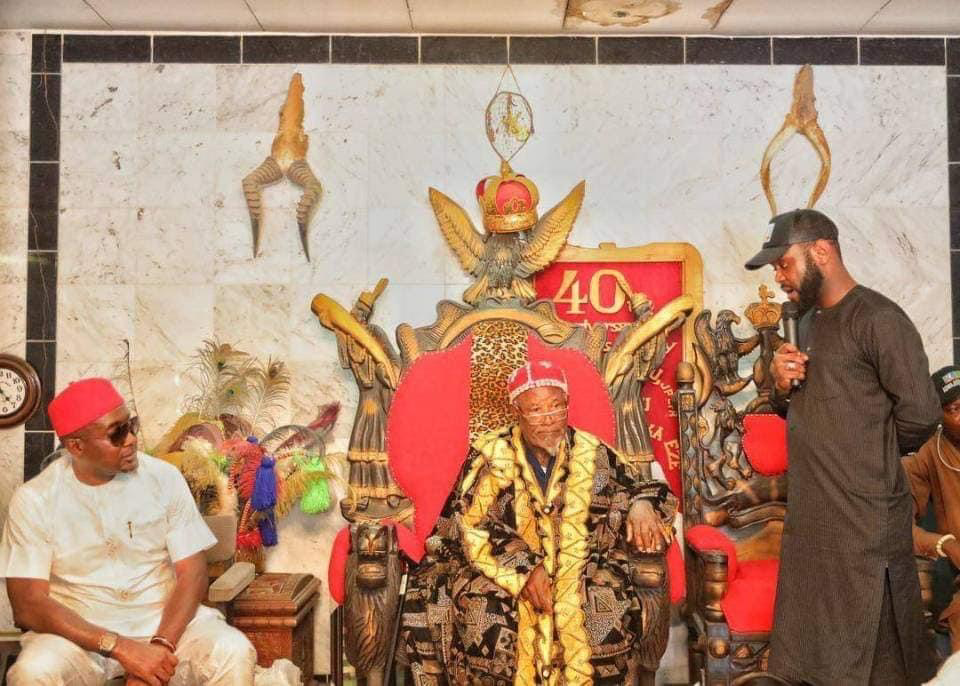
Like many Igbo communities, Mbaukwu maintains a well-organized traditional leadership structure that reflects the customs of Igbo people while aligning with modern administrative systems. The town is led by a recognized traditional ruler, Igwe Mbaukwu who serves as the custodian of culture and the symbol of unity among the people. The traditional ruler is supported by a council of chiefs, elders and titled men known as Ndi Nze na Ozo who advise on cultural matters and help preserve peace and order.
The traditional institution in Mbaukwu predates the colonial era when governance was based on family heads and councils of elders. These elders settled disputes, managed communal lands and coordinated festivals and rituals. The introduction of the Igwe system during colonial administration brought formal recognition to the traditional ruler’s office, allowing it to interface with government authorities while maintaining cultural functions.
In addition to the Igwe’s palace, leadership at the grassroots level operates through the Mbaukwu Town Union (MTU) which represents the collective interests of the community. The town union works alongside the traditional council to promote development projects, maintain public order and address issues affecting the people.
The coexistence of traditional authority and democratic town union governance has helped Mbaukwu to preserve its cultural values while adapting to modern administrative realities.
Economy and Resources
The economy of Mbaukwu is primarily based on agriculture, trade and small-scale enterprises. Its residents engage in farming as a major occupation supported by the fertile red soil and favourable weather conditions of the Awka upland area. Commonly cultivated crops include yam, cassava, maize, cocoyam, vegetables and oil palm. These serve both subsistence and commercial purposes, contributing to the local food supply and small trading activities.
In addition to farming, Mbaukwu has a vibrant trading culture. Local markets within the community and nearby towns provide platforms for buying and selling farm produce, household goods, textiles and other commodities. Many residents are also involved in crafts such as carpentry, tailoring, blacksmithing and masonry. These trades have been part of Mbaukwu heritage for generations.
Remittances from indigenes living in cities across Nigeria and abroad also play an important role in the town’s economy. Many Mbaukwu people are professionals, business owners and civil servants who contribute to community development through investments and donations to town projects.
The town has access to natural resources such as palm produce, wood and fertile land, though it has limited industrial development. Recent years have seen a growing interest in small businesses and youth entrepreneurship, supported by community associations and town union initiatives aimed at improving livelihoods.
Major Markets and Trade
Mbaukwu has a thriving local trading culture centered around its markets which serve as important hubs for commerce and social interaction. The main market in the town is Mbaukwu Main Market where farmers, traders and artisans sell a variety of goods including fresh farm produce, vegetables, yam, cassava, fruits, palm oil and household items. This market operates on a periodic schedule common to Igbo communities, attracting buyers and sellers from both within the town and neighbouring communities.
Trade in Mbaukwu is not limited to agricultural produce. Artisans in the town are known for carpentry, blacksmithing, tailoring and other craft-based activities, and their products are often sold in local markets or to traders who distribute them to nearby towns. Small-scale retail businesses, food vendors and service providers also contribute significantly to the local economy.
The strategic location of Mbaukwu within Awka South allows its markets to connect with larger commercial centres, including Awka, the State capital, thereby enhancing opportunities for trade and commerce. These markets are also central to community life as they provide spaces for social interaction, cultural exchange and the sale of locally produced goods.
Deities, Totems, Traditional Beliefs and Religion
Mbaukwu, like many Igbo towns has a rich history of traditional religion and spiritual practices. Before the widespread adoption of Christianity, the people worshiped ancestral spirits, natural deities and guardian gods that were believed to protect the community, regulate morality and oversee farming and family welfare.
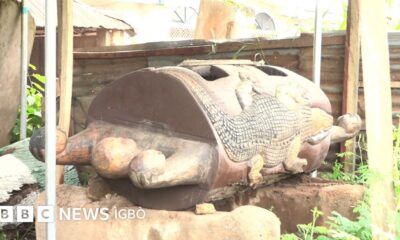
Among the key traditional deities in the town is Ikenga, a personal and communal deity associated with strength, achievement and success. Ikenga is widely revered in the Awka cultural zone which includes Mbaukwu, and is often represented by carved wooden figures kept in shrines or households.
Another significant deity is Ala, the earth goddess who is considered in Igboland the custodian of morality, fertility and agricultural productivity. Ala shrines are traditionally found in central locations within villages, and offerings are made to it to ensure the fertility of the land and the wellbeing of the people.
Certain animals also hold symbolic importance in Mbaukwu. The python is considered sacred in some parts of the community, reflecting a broader Igbo belief system that associates snakes with the earth goddess, Ala. Killing or harming these animals is traditionally forbidden and seen as an offense against the deity.
With the arrival of European missionaries in the late 19th and early 20th centuries, Christianity became widely established in Mbaukwu. Today, the majority of residents are Christians, predominantly Roman Catholics and Anglicans.
Regardless, elements of traditional religion continue to be observed in cultural festivals, initiation ceremonies and communal rituals. These practices are often integrated with Christian beliefs, reflecting a syncretic religious culture that honours both ancestral heritage and modern faith.
Festivals and Cultural Life
Mbaukwu has a vibrant cultural life that is closely tied to its festivals and traditional celebrations. Like many Igbo communities, its festivals mark significant events in the agricultural calendar, social milestones and communal heritage.
One of the most prominent festivals in Mbaukwu is the New Yam Festival, locally known as Iri Ji. This annual festival usually takes place between August and September, signaling the end of the farming season and the beginning of the harvest.
During the festival, the eldest man of each family or village offers the first yams to the ancestors and the gods, particularly, Ala, the earth goddess. The festival is celebrated with traditional music, dance performances, masquerade displays and communal feasting, thus providing an opportunity for younger generations to learn and participate in cultural traditions.
In addition to the New Yam Festival, Mbaukwu observes village-specific masquerade festivals, which are important in preserving its identity and oral history. Masquerades appear during significant community events such as funerals, title-taking ceremonies and other traditional rites. These performances combine elaborate costumes, masked dancers, music and storytelling, serving both entertainment and spiritual functions.
Other cultural practices include age-grade associations and women’s groups organizing communal labour, festivals and traditional dances. These groups play an active role in fostering social cohesion, maintaining customs and coordinating public ceremonies. Music, drumming and local dances are integral to Mbaukwu cultural expression, ensuring that both young and old participate in the preservation of heritage.
While Christianity is now predominant in the town, traditional festivals continue to be observed, often alongside church activities. This dual participation reflects its ability to maintain cultural continuity while embracing modern religious practices.
Town Unions and Community Organization

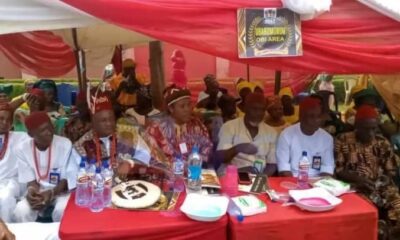
Mbaukwu Town Union Election
Mbaukwu has a well-structured system of community organization anchored on its Town Union which serves as the principal body for civic administration, development projects and representation of indigenes both within and outside the town. Mbaukwu Town Union (MTU) is formally recognized by the Anambra State government and operates alongside traditional leadership to ensure smooth governance and communal cohesion.
The town union is composed of representatives from the various villages that make up Mbaukwu. These representatives coordinate development initiatives such as construction and maintenance of boreholes, schools, health centres, roads and other infrastructure. They also organize cultural events, mediate disputes and liaise with government agencies and non-governmental organizations to bring projects and resources to the town.
In addition to the main town union, Mbaukwu has age-grade groups which are organized according to the stages of life of male community members. These groups participate in community labour, security, cultural performances and festivals. Women’s associations play complementary roles, especially, in managing communal welfare programmes, health initiatives and local economic activities such as market management and small-scale trading.
The combination of the town union, age-grade associations and women’s groups has allowed the town to maintain social cohesion, mobilize resources for development and preserve cultural practices. The town union also functions as a link between the local community and the broader Igbo diaspora, facilitating donations, educational sponsorships and infrastructural investments from indigenes living outside the town.
Local Dishes and Cuisine
The cuisine of Mbaukwu reflects the broader Igbo culinary tradition, emphasizing starchy staples, soups, vegetables and locally sourced proteins. Meals are typically prepared using ingredients grown within the town or sourced from neighbouring communities, reinforcing the link between agriculture and daily life.
A staple food in Mbaukwu is yam which is often boiled, pounded into swallow or roasted. Pounded yam is commonly served with a variety of traditional soups such as onugbu soup; ogbono soup; and vegetable soups like ugu (fluted pumpkin) soup combined with assorted meats or fish.
Cassava is another key staple processed into fufu, or garri which are paired with soups for everyday meals. Other local dishes include yam porridge, plantain porridge, and stews prepared with palm oil, tomatoes, and seasonings. Palm oil sourced from locally grown oil palms is central to most dishes and contributes to their distinctive flavour and colour.
Snacks and beverages in Mbaukwu include akara, moimoi, ntucha (okpa) and palm wine which is traditionally tapped from palm trees and consumed during social gatherings and festivals. Traditional food preparation and sharing remain important aspects of cultural life, especially during the New Yam Festival and other communal celebrations where meals symbolize abundance, gratitude and unity.
Prominent Sons and Daughters
Mbaukwu has produced several distinguished individuals who have made significant contributions to governance, culture, and community development in Anambra State and beyond. These sons and daughters embody long-standing values of education, service and integrity that reflect Mbaukwu’s reputation as a centre of cultural pride and leadership.
Here are names of some notable individuals associated with Mbaukwu and their contributions:
- Igwegbe Odum – His life story was the subject of the Igbo novel Omenuko by Pita Nwana.
- Igwe Peter Nwokike Anugwu — Recognized traditional ruler (Igwe) of Mbaukwu, listed in the register of recognized monarchs of Anambra State.
- Gilbert Onyekachukwu Ibezim, often referred to as Onyekachukwu Ibezim – He is the Deputy Governor of Anambra State.
These individuals symbolize the heritage and civic contributions of Mbaukwu people.
Landmarks and Tourist Attractions
Mbaukwu, located within Awka South Local Government Area features several natural and cultural landmarks that reflect both its history and its scenic environment. While it is primarily a residential and agricultural community, the town holds points of interest that attract visitors and serve as symbols of its heritage.
One notable landmark is the Igwe’s Palace, the official residence of Igwe Mbaukwu which serves as the traditional and cultural centre of the town. The palace is where community meetings, traditional ceremonies and royal functions take place, offering visitors a glimpse into the structure of local governance and Igbo customs.
Mbaukwu Civic Centre, used for town meetings, festivals and social events is another central landmark that represents the unity of the villages. It often hosts cultural activities and public gatherings, especially, during annual celebrations like the New Yam Festival.
Mbaukwu landscape is marked by gentle hills and elevated views typical of the Awka upland region. These provide natural sightseeing opportunities, especially, for visitors interested in the rural beauty of southeastern Nigeria. The surrounding farmlands, palm groves and traditional homesteads also reflect the community’s agricultural lifestyle and connection to the land.
Religious landmarks include several long-established churches such as St. Lawrence Catholic Church, Mbaukwu, and St. Peter’s Anglican Church which are among the oldest worship centres in the area and hold historical significance in the spread of Christianity within the town.
While Mbaukwu may not yet have formally developed tourist facilities, its cultural festivals, traditional palace and picturesque environment continue to attract visitors and indigenes who return home to reconnect with their roots.
Challenges The Town Faces
Like many semi-urban communities in southeastern Nigeria, Mbaukwu faces a range of developmental and environmental challenges that affect daily life and long-term growth.
One of the key challenges is infrastructure development. While the town has access roads connecting it to Awka and neighbouring communities, some internal roads remain in poor condition, particularly, during the rainy season. Limited drainage systems also contribute to erosion, a common issue across the Awka upland area.
Water supply remains another concern. Although several boreholes and small-scale water projects exist, they are often insufficient to meet the growing needs of the population, especially, during the dry season. Electricity supply is also inconsistent, affecting local businesses and domestic activities.
Youth unemployment and underemployment pose social and economic challenges as many young people migrate to urban centres in search of better opportunities. Despite the town’s strong trading and farming base, limited industrial activity and few formal employment opportunities have slowed economic diversification.
Environmental degradation from unchecked sand excavation and poor waste management also threatens the landscape and farmlands. Furthermore, the pressure of urban expansion from nearby Awka is gradually changing traditional land use patterns in Mbaukwu.
Despite these challenges, community efforts through the Mbaukwu Town Union and local associations continue to address pressing needs by initiating self-help projects, youth training programmes and infrastructure improvements.
Positive Outlook and Opportunities
Despite the developmental challenges it faces, Mbaukwu has a strong foundation for growth, supported by its strategic location, cultural identity and community-driven initiatives. Situated just a few kilometers from Awka, the Anambra State capital, the town benefits from increasing urban expansion which is opening up opportunities for business, housing and small-scale industries.
The educated population and strong diaspora network also contribute significantly to its prospects. Many indigenes of Mbaukwu working in cities across Nigeria and abroad actively invest in local development projects, support educational programmes and fund community infrastructure through the Mbaukwu Town Union (MTU). These efforts have led to improvements in healthcare, education and road maintenance, especially, in the past decade.
Agriculture remains a key area of opportunity. With fertile soil and favourable climatic conditions, Mbaukwu has potential for agricultural modernization and small agro-based enterprises. There is also a growing interest among youths in entrepreneurship, digital skills and vocational training, encouraged by both local and State development initiatives.
Tourism and cultural promotion present another area of potential. The festivals, traditional institutions and scenic landscape could be developed into attractions for cultural tourism within the Awka region. Improved documentation and preservation of historical and natural sites, such as the Igwe’s Palace and local festivals, could further strengthen this sector.
With continued collaboration between traditional leadership, the town union and government agencies, Mbaukwu is well positioned to harness these opportunities and sustain its reputation as a peaceful, progressive and culturally rich community in Anambra State.
In Conclusion …
Like other Igbo communities, Mbaukwu stands today as a proud custodian of Igbo culture, history and resilience. From its ancient origins within the Awka cultural heartland to its modern-day growth as a vibrant community near the Anambra State capital, the town has maintained a remarkable balance between tradition and progress. Its people continue to uphold strong values of unity, hard work and respect for heritage while embracing education, innovation and development.
Though it faces challenges typical of many growing Nigerian communities, including infrastructure gaps, youth unemployment and environmental concerns, Mbaukwu’s collective spirit remains its greatest strength. The active involvement of its traditional rulers, town union and diaspora community reflects a shared commitment to building a better future for coming generations.
With its scenic landscape, rich festivals and growing potential in agriculture, trade and tourism, Mbaukwu is well placed to become a model of community-led development in Anambra State. It remains, in every sense, a living treasure of Igbo heritage, proudly preserving its roots while looking confidently toward the future.
References
- https://www.emmason247.com.ng/blog/history-origin-culture-and-traditions-of-mbaukwu-town-in-anambra-state/VZWGCZWZGRV
- https://ijrpr.com/uploads/V4ISSUE10/IJRPR18013.pdf
- https://en.wikipedia.org/wiki/Awka_South
You might want to check this out…