






Anambra News
History of Nnewi: The Home of Nigerian Industry Giants

Nnewi is a thriving industrial city in southeastern Nigeria known as the “Japan of Africa” because of its remarkable manufacturing and entrepreneurial achievements. Explore the history, unique apprenticeship system, leading industry figures, challenges, and the way forward for this industrial town.

Nnewi is not just another town in southeastern Nigeria. It is a place where industry grew from grit, where business knowledge passed from one generation to the next, and where manufacturing took root, long before government incentives became a thing.
Located in Anambra State, Nnewi has earned a reputation as one of Nigeria’s most important indigenous industrial hubs by contributing significantly to trade, manufacturing, and entrepreneurship across the country.
Often referred to as the “Japan of Africa,” this industrial city is best known for its strong presence in automobile spare parts, manufacturing, and industrial production. This reputation did not come from chance. It was built over decades by traders who became manufacturers, apprentices who became employers, and business leaders who believed in local production when dependence on importation was the norm. Today, its name is closely and rightly linked with enterprise, self-reliance, and innovation.
Beyond factories and markets, Nnewi is also known for its unique business culture. The town played a major role in popularizing the Igbo apprenticeship system, commonly known as Igba Boi. This system has produced thousands of business owners and remains one of the most effective informal economic models in Africa. Through mentorship, discipline, and eventual settlement, it has created a cycle of opportunity that continues to impact its economy.
This article explores the history of Nnewi, with emphasis on the roots of its industrial success, the industry giants who transformed the town, the challenges it faces today, and the path forward. More than a business story, it presents a portrait of a community that turned vision, hard work, and shared prosperity into lasting impact.
History of Nnewi

Nnewi, also known as Anaedo, meaning Land of Edo is one of the most historically significant towns in southeastern Nigeria. According to oral tradition, the settlement that became Nnewi emerged around the 15th century. The most widely referenced origin account traces its ancestry to Mmaku who is regarded as the founding forebear of the people. From Mmaku came lineages that grew through migration and settlement, drawing people from surrounding Igbo areas and beyond into what is now known as Nnewi.
Alongside the Mmaku tradition, other oral accounts speak of earlier ancestral figures such as Ikenga and Agbaja, names that appear across wider Igbo origin narratives. These accounts are best understood as symbolic expressions of migration, shared ancestry, and identity rather than fixed genealogical records. Together, these traditions reflect how Nnewi, like many Igbo communities preserved its past through oral history rather than written documentation.
Nnewi developed as a federated community made up of four quarters, namely Otolo, Uruagu, Umudim, and Nnewichi, listed in order of seniority. The traditional leaders of these four quarters are referred to as Obi. Each quarter consists of villages that are further organized into extended family units known as umunna. Leadership at the family level rests with elders known as Obi who traditionally handled dispute resolution, communal labour, and customary rites.
Political authority in Nnewi has historically been decentralized but orderly. Otolo, regarded as the senior quarter produces the paramount ruler of the town. By tradition, the ruler holds a dual role as both the Igwe of Nnewi and the Obi of Otolo, thus symbolizing unity among the four quarters rather than dominance.
Before colonial contact, Nnewi functioned as a self-governing society with strong internal cohesion. Social order was maintained through customary laws and spiritual beliefs rooted in Odinani, the indigenous Igbo religious system. The economy during this period was largely agrarian and craft-based, supported by farming, palm produce, hunting, local trade, and barter with neighbouring communities. Land ownership played a central role in social status and identity.
Spiritual life was deeply intertwined with daily living. Several deities were prominent in Nnewi cosmology, among them Edo, Ezemewi, Eze, Ele, and Ana. Edo is regarded as the supreme deity of the land, which explains the name “Anaedo”. Oral tradition presents Edo as a powerful female deity married from Nnobi and associated with protection and moral order. Her shrine is located near the Agbo-Edo area, close to Nkwo Nnewi Market.
Ezemewi who is said to be the husband of Edo is closely linked to authority and continuity in Nnewi belief systems, while Eze symbolizes leadership and kingship. Ele is associated with truth, morality, and social discipline, particularly in matters involving oaths and communal justice. Ana, the earth deity, governs land, fertility, agriculture, and moral conduct. Offenses against the land, known as nso Ana were considered serious violations and addressed through customary and ritual processes. Although Christianity is now dominant in Nnewi, these deities remain culturally significant to adherents of traditional religion.
British colonial presence reached Nnewi around 1904, marking a turning point in the political and administrative history. Colonial rule introduced new systems of taxation, courts, and centralized administration, altering many indigenous governance structures. During this period, Nnewi was formally recognized as a town within the colonial framework.
The era of centralized traditional rulership became more pronounced under the Orizu royal dynasty. King Orizu I, formally known as Eze Ugbonyamba played a key role in stabilizing traditional leadership during the colonial period. His reign helped to bridge indigenous authority with colonial administration.
He was succeeded by King Orizu II (Chief Josiah Nnjai Orizu) who ruled during a time of expanding commerce and administrative change. The dynasty continued with Igwe Kenneth Onyemeke Orizu III whose reign coincided with Nigeria’s post-independence period and Nnewi’s emergence as a major commercial centre. Collectively, these rulers helped to preserve the traditional institutions while adapting to modern political realities.
In 1991, Nnewi was officially recognized as a city. It is often described as the second-largest urban centre in Anambra State and is unique in Nigeria for functioning as both a town and a local government area known as Nnewi North Local Government Area. Over time, the town has experienced rapid population growth and urban expansion.
Economically, Nnewi evolved from a self-sufficient agrarian community into one of Nigeria’s most important indigenous industrial and trading hubs. It is especially known for its auto spare parts markets, including the Agbo Edo Motor Spare Parts Market as well as manufacturing and small and medium-scale industries. In recent decades, the town has gained further recognition through vehicle manufacturing, most notably Innoson Vehicle Manufacturing while agriculture continues alongside urban development.
The commercial success of Nnewi has made it home to people from across Nigeria and beyond, including traders, manufacturers, artisans, and civil servants who are not indigenes but contribute to its economic life.
Culturally, Nnewi maintains a rich heritage. Festivals such as Afiolu, the four-day New Yam Festival held annually in late August, and the Ofala Festival, celebrated in December to honour the Igwe and mark his coronation anniversary remain important expressions of identity. Traditional marriage rites known as Igba Nkwu, and other cultural ceremonies continue to reinforce communal values.
Together, these historical, spiritual, political, and economic elements form the foundation of the identity of the town and help to explain how the town evolved into the industrial powerhouse it is known as today.
The Role of Nnewi in Pioneering the Igba Boi Apprenticeship System
The rise of Nnewi as an industrial and commercial centre is closely connected to the Igba Boi apprenticeship system. While this system exists across many Igbo communities, Nnewi played a particularly important role in refining, expanding, and popularizing it as a powerful engine for business growth and wealth creation.
Igba Boi is a traditional business mentorship arrangement in which an established trader or manufacturer known as the Oga takes in a young apprentice called Nwa Boi. The apprentice usually lives with the Oga and works in the business for a fixed number of years.
During this period, the apprentice learns not only the technical aspects of trade or manufacturing but also customer relations, sourcing, negotiation, discipline, and financial management. There is no salary in the conventional sense. Instead, the reward comes at the end of the apprenticeship.
What distinguished Nnewi was the scale and consistency with which this system was practiced. As Nnewi traders became dominant in motor spare parts and mechanical goods from the mid-20th century, they relied heavily on apprentices to run shops, warehouses, and supply chains across Nigeria.
Over time, this created a structured and trusted pathway from poverty to business ownership. At the completion of service, the Oga would “settle” the apprentice by providing startup capital, goods, or equipment to establish an independent business. This settlement was not optional. It was a moral and cultural obligation.
Through this process, Nnewi produced generations of entrepreneurs who replicated the same model. Many of today’s major industrialists from the town began their journeys as apprentices. In turn, they trained others, thus creating a self-sustaining cycle of opportunity. The system reduced unemployment, spread business knowledge quickly, and ensured that capital circulated within the community rather than remaining in the hands of a few individuals.
Researchers and economists have pointed to the Igba Boi system, as practiced in Nnewi, as one of the most effective informal economic models in Africa. It operates without banks, formal contracts, or government intervention, yet it is built on trust, reputation, and long-term thinking.
In Nnewi, this system supported the transition from trading to manufacturing by ensuring a steady supply of skilled, experienced business operators who understood both local markets and national demand.
In recent years, social and economic changes have challenged the traditional structure of Igba Boi. Formal education, urban migration, and legal disputes have altered how apprenticeships are arranged. Even at that, the influence of Nnewi in shaping and spreading this system remains undeniable. Through that, the town has demonstrated that mentorship, patience, and shared success could build not just individual businesses, but an entire industrial community.
The Igba Boi system is, therefore, a cultural practice in Nnewi and one of the foundations upon which its reputation as the Home of Industry Giants was built.
Why Nnewi Is Known as the “Japan of Africa”

Nnewi earned the name “Japan of Africa” because of its strong culture of manufacturing, technical adaptation, and locally driven industrial growth. The comparison is not about size or global reach. It is about mindset. Like Japan’s post-war industrial rise, Nnewi built its economy through practical skills, innovation, and a deep belief in local production.
The roots of this reputation can be traced to the mid-20th century when Nnewi traders became dominant players in the motor spare parts business across Nigeria. At first, these traders dealt mainly in imported parts. Over time, however, they began to understand the mechanics behind the products they sold. Rather than relying solely on imports, many entrepreneurs moved into local fabrication and manufacturing. Small workshops grew into factories, and traders became producers.
This shift from trading to manufacturing is one of the strongest reasons the town stands out. It has developed clusters of small and medium-scale industries producing automobile spare parts, electrical cables, batteries, plastic products, motorcycles, and household goods. These industries were not driven by government policy or foreign investment. They were built by private individuals using personal capital, apprenticeship-trained labour, and locally acquired technical knowledge.
Another factor behind the nickname is Nnewi’s culture of imitation followed by improvement. Many manufacturers began by studying imported products, understanding how they worked, and then producing local alternatives that suited Nigerian conditions. This approach mirrors the early industrial strategy used by Japan where learning through replication eventually led to innovation. In Nnewi, this method allowed businesses to reduce costs, meet local demand, and remain competitive.
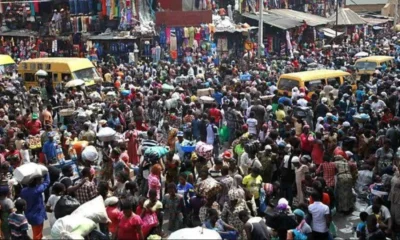
The presence of Nkwo Nnewi Market which is one of the largest motor spare parts markets in West Africa also reinforces this reputation. The market serves as a distribution hub for locally manufactured and imported goods that link the factories to buyers across Nigeria and neighbouring countries. It supports a dense network of suppliers, technicians, transporters, and traders, thereby creating an industrial ecosystem rather than isolated businesses.
Today, the title “Japan of Africa” reflects its identity as a town where industry grew from the ground up. It speaks to the ability of its people to create value with limited resources, to learn technical skills outside formal institutions, and to build industries that serve real market needs.
While the comparison is symbolic, it captures an important truth. The town represents one of Africa’s clearest examples of indigenous industrialization driven by community, skill, and enterprise rather than dependency.
Nnewi’s Industry Giants

The industrial rise of Nnewi is closely tied to individuals who moved beyond trading into structured manufacturing and large-scale enterprise. These industry giants helped to transform Nnewi into a town known for production, innovation, and indigenous capital. Their influence extends far beyond Anambra State and has influenced key sectors of Nigeria’s economy.
The pioneers of Nnewi industry laid the groundwork for modern manufacturing at a time when most Nigerian businesses focused on importation. Through persistence, local investment, and skill development, they demonstrated that indigenous companies could compete in capital-intensive industries.
Chief Mathias Onwugbenu, founder of Omata Holdings was one of the early industrial figures who contributed to Nnewi’s transition from trading to manufacturing. His business interests spanned large-scale trading and industrial production that helped to strengthen the commercial and manufacturing base of the town during its formative years.
Sir D. C. Ofodeme, founder of Uru Industries Limited and the OTC Group played a notable role in indigenous manufacturing, particularly in metal and industrial products. Uru Industries became one of the factories that reinforced Nnewi’s growing reputation as a production centre capable of meeting national demand.
Chief Obiajulu Uzodike, founder of Cutix Plc stands out as one of Nnewi’s most significant industrial pioneers. Cutix Plc is Nigeria’s first indigenous cable manufacturing company and is publicly listed on the Nigerian Exchange. The company specializes in electrical, automotive, and power cables used across various sectors of the economy. The presence of Cutix Plc in Nnewi marked a major milestone which proved that world-class industrial manufacturing could be successfully established and sustained within the town.
Sir Chika Okafor, Chairman of the Chicason Group represents another pillar of Nnewi’s industrial success. Chicason Group operates in oil and gas, manufacturing, and industrial services, with facilities and operations across Nigeria. Its scale and diversification reflect the expanding reach of Nnewi entrepreneurs into heavy and capital-intensive industries.
Chief Cletus Madubugwu Ibeto, founder of the Ibeto Group of Companies is one of Nigeria’s most prominent industrialists. The Ibeto Group has major interests in cement production, petrochemicals, automotive parts, and manufacturing. With operations across several Nigerian States and beyond, the group exemplifies the national and regional impact of Nnewi-born enterprises.
Chief Innocent Ifediaso Chukwuma, founder of Innoson Vehicle Manufacturing (IVM) is widely recognized for establishing Nigeria’s first indigenous automobile manufacturing company. Innoson produces buses, trucks, and passenger vehicles assembled in Nigeria, many of which are used by government agencies and private organizations. The company has become a symbol of local industrial capability and has further strengthened the identity of Nnewi as an automotive manufacturing hub.
Together, these pioneers reshaped the economic landscape of the town. Many began their journeys as apprentices or small traders and later built factories that employed thousands. Beyond business success, they invested in mentorship, skills transfer, and community development, thus ensuring that industrial knowledge did not remain concentrated in a few hands.
Alongside these pioneers, a new generation of Nnewi entrepreneurs is carrying the industrial legacy forward. These business leaders are active in plastics manufacturing, electrical components, logistics, transport, hospitality, agro-processing, renewable energy products, and technology-enabled services.
Many combine traditional apprenticeship training with formal education and exposure to global markets. They adopt modern production standards, digital tools, and quality control systems while maintaining the strong networks and work ethic that define Nnewi business culture. Though often less publicly visible, their growing factories and enterprises continue to expand the industrial footprint of the town.
This steady renewal across generations is one of Nnewi’s greatest strengths. Rather than relying on a single dominant firm, the town has produced waves of entrepreneurs who build, mentor others, and reinvest locally. Through this process, it has sustained its reputation as a true home of industry giants and a leading example of indigenous industrial development in Africa.
Challenges
Despite its strong industrial reputation, Nnewi faces several challenges that affect business growth and overall development. These issues are widely acknowledged by residents, business owners, and policy observers.
One major challenge is infrastructure. Many roads within and leading to Nnewi are in poor condition, and that increases transportation costs for manufacturers and traders. Electricity supply remains unreliable, forcing many factories to depend on generators which raises production expenses and reduces competitiveness.
Another concern is limited access to affordable financing, especially for small and medium-scale enterprises. While Nnewi has a strong culture of self-funded businesses, modern manufacturing often requires larger capital outlays. High interest rates and strict lending conditions make expansion difficult for many local industries.
Environmental pressure is also growing. Industrial activities have increased waste generation, and in some areas, proper waste management systems are inadequate. This creates risks for public health and the environment, if not properly addressed.
The Igba Boi apprenticeship system which has long supported business growth in Nnewi is facing modern challenges. Changes in education, urban migration, and legal disputes have made traditional apprenticeship arrangements less common or less stable than in the past.
Finally, competition from imported goods continues to affect local manufacturers. Cheaper foreign products, sometimes of lower quality, make it harder for locally made goods to dominate the market without strong policy support.
These challenges do not diminish the achievements of the town, instead, they highlight areas that require attention, if the town is to sustain and grow its industrial strength in the years ahead.
Way Forward
For Nnewi to sustain its industrial strength and remain competitive, deliberate and coordinated efforts are needed from both the private sector and government.
Improving infrastructure should be a priority. Better roads, stable electricity, and reliable water supply will reduce production costs and make it easier for manufacturers to operate efficiently. Public and private partnerships can play a key role in achieving this.
There is also a need to support small and medium-scale industries with better access to financing. Affordable credit, cooperative funding models, and targeted industrial grants can help local businesses expand production and adopt modern equipment.
The Igba Boi apprenticeship system can be strengthened by aligning it with formal education and vocational training. This will help young people gain practical skills while also meeting modern legal and professional standards.
Attention should be given to environmental management. Proper waste disposal, cleaner production methods, and enforcement of basic environmental standards will protect public health and ensure sustainable industrial growth.
Finally, encouraging innovation and technology adoption will help Nnewi industries compete with imported goods. Investment in quality control, product branding, and local research can open new markets and strengthen confidence in made-in-Nnewi products.
With focused planning and continued entrepreneurial drive, Nnewi can build on its strong foundation and secure its place as one of Africa’s leading indigenous industrial centres.
In Conclusion …
Nnewi stands as a remarkable example of what vision, hard work, and community-driven enterprise can achieve. From its early days as a centre of trade and craftsmanship to becoming known as the “Japan of Africa,” the town has consistently demonstrated resilience, innovation, and a commitment to local industrial development.
Its success is built on strong cultural practices like the Igba Boi apprenticeship system which has created generations of skilled entrepreneurs, as well as the leadership of pioneering industrialists who turned trading houses into factories and large-scale enterprises. Today, a new generation continues to expand its industrial footprint by embracing modern technology while upholding the values that made Nnewi a hub of enterprise.
Despite challenges such as infrastructure gaps, environmental concerns, and competition from imports, Nnewi people remain resourceful and determined. By investing in infrastructure, supporting SMEs, modernizing apprenticeship training, and encouraging innovation, the town can continue to thrive and inspire other communities across Nigeria and Africa.
In every sense, Nnewi is not just a town. It is a symbol of African ingenuity, home to industry giants, and a model for sustainable local industrial development.
References
- https://en.wikipedia.org/wiki/Nnewi_Kingdom
- https://nnewi.info/nnewi-history/
- https://nnewicity.com/nnewi-the-kingdom-the-people-and-the-throne/
- https://archive.businessday.ng/enterpreneur/article/nnewi-the-japan-of-africa/
- https://nnewinorth.an.gov.ng/
- https://nnewicommunity.com/nnewi-history/