

Nigerian Ethnic Groups
The Idoma People of Nigeria: Complete Details of History, Culture, Language, Traditions and Beliefs

Idoma People are a major ethnic group from Nigeria known for their rich history, lively culture, language, traditions and ancestral beliefs. Explore their origins, social life, customs, festivals, food and modern identity in detailed, verifiable form.

The Idoma People are one of Nigeria’s most culturally rich and historically rooted ethnic groups that are often less discussed outside their homeland. Travel through the southern part of Benue State and you will find communities where ancestral stories are still told with pride, traditional festivals still draw entire towns together, and the Idoma language still carries the wisdom of generations. This is not just a people with a past. It is a living culture with memory, meaning and momentum.
The Idoma People of Nigeria are found in the southern part of the River Benue with strong cultural centres in places like Otukpo, Agatu, Apa and Ado. They are known for their deep respect for ancestry, their energetic dances like the Ogirinya, their traditional belief in Alekwu, and their famous Okoho soup that rarely misses a celebration. At the heart of their identity is community. Family ties matter. Elders are honoured. History is preserved not only in books but in everyday conversation.
To understand the Idoma People is to get to know a story of migration, settlement, adaptation and continuity. It is a story carried in language, expressed in festivals, guarded by traditional leadership under the Och’Idoma, and sustained by both tradition and modern faith. While many Idoma people today are Christians, ancestral reverence and cultural customs remain woven into daily life.
This article offers a detailed and fact-checked exploration of the Idoma People, their history, culture, language, traditions and beliefs. It looks at where they come from, how they organize their society, what they eat, how they celebrate, and how they are preserving their identity in a fast-changing Nigeria.
Whether you are researching Nigerian ethnic groups, tracing ancestry, or simply curious about the Idoma tribe, this provides a clear and engaging starting point into one of central Nigeria’s enduring cultural communities.
Where the Idoma People Live
The Idoma People live mainly in the southern and western parts of Benue State in central Nigeria. Their homeland lies largely south of the River Benue which is a major waterway that has influenced trade, farming and settlement patterns in the region for centuries. Within Benue State, the Idoma are the second largest ethnic group after the Tiv.
Most Idoma communities are found in local government areas such as Otukpo, Ado, Agatu, Apa, Ohimini, Okpokwu and Ogbadibo. Otukpo is often regarded as the cultural and administrative centre of the Idoma People. It is also the seat of the Och’Idoma, the paramount traditional ruler of the Idoma nation.
Beyond Benue State, smaller Idoma populations can be found in parts of Nasarawa State, Kogi State, Cross River State and Enugu State. Migration for farming, trade, education and employment has also led to Idoma communities in major Nigerian cities such as Abuja, Lagos and Port Harcourt. Despite relocation, many families still maintain close ties to their ancestral towns by returning home during festivals, marriages and important cultural events.
The land traditionally occupied by the Idoma People is fertile and suitable for agriculture. Farming remains a key occupation, with crops such as yam, cassava, maize and rice commonly grown. Fishing and trading are also part of local economic life, especially in riverine areas like Agatu.
Geographically and culturally, the Idoma homeland sits at a meeting point between different Nigerian ethnic groups. They share boundaries with the Tiv to the north, the Igala to the west, the Igbo to the south and the Cross River groups to the southeast. This location has encouraged interaction, exchange and coexistence over generations while allowing the Idoma People to maintain a distinct identity.
Today, whether in rural villages or urban centres, the Idoma People remain strongly connected to their ancestral land in Benue State. The soil, rivers and towns of this region are not just places on a map. They are central to the history, memory and continuing story of the Idoma nation.
Origins and Early History

The story of the Idoma People begins long before colonial records and modern state boundaries. Like many ethnic groups in central Nigeria, their early history is preserved through oral tradition, clan genealogies and shared memory. These accounts speak of migration, settlement and the gradual formation of a distinct Idoma identity in what is now southern Benue State.
Linguistic and historical studies place the Idoma within the larger Benue–Congo branch of the Niger-Congo language family. This connection links them to several other ethnic groups in central Nigeria. Scholars generally agree that the Idoma language belongs to the Idomoid subgroup of the Volta-Niger family which supports the idea that the ancestors of the Idoma People were part of the broader migration movements that took place centuries ago across the Middle Belt region.
Oral traditions among the Idoma often trace their origin to the ancient Kwararafa confederacy, a powerful multi-ethnic kingdom that once dominated parts of central Nigeria between the 15th and 18th centuries. While details vary from one community to another, many Idoma narratives connect their ancestors to this larger political and military network. These traditions suggest that waves of migration and internal movements eventually led different Idoma clans to settle permanently in areas such as Apa, Agatu and Otukpo.
As these groups settled, they established farming communities along fertile plains and river valleys. Agriculture became central to their livelihood, particularly yam cultivation which still holds cultural importance among the Idoma People today. Over time, shared language, marriage alliances and common spiritual beliefs strengthened unity among these settlements.
The pre-colonial Idoma society was organized around clans and extended families. Authority rested with the elders and lineage heads who oversaw land distribution, conflict resolution and spiritual matters. Communities interacted with neighbouring groups through trade, intermarriage and occasional conflict. Their location in central Nigeria placed them at a crossroads between the northern and southern cultural zones which encouraged exchange while preserving distinct customs.
When the British colonial administration reached the region in the late 19th and early 20th centuries, the Idoma People were incorporated into what later became Benue Province. Colonial rule introduced new political structures and missionary activity which gradually influenced religion, education and governance. It was during this period that the institution of the Och’Idoma was formalized as a central traditional authority for the Idoma.
Despite these changes, the Idoma People retained many core elements of their identity. Oral history, respect for ancestry, communal land ownership and strong kinship ties continued to guide everyday life. Their early history is not written in one single document. It lives in language, ritual, settlement patterns and the enduring memory of families who still tell stories of where they came from and how they found their home in the Benue valley.
This understanding helps to explain their present. It reveals a community formed through migration, adaptation and cooperation, rooted deeply in the soil of central Nigeria and sustained by a strong sense of belonging.
Language of the Idoma People
Language is at the heart of the identity of the Idoma People. It carries their history, their humour, their proverbs and their worldview. When the elders speak in Idoma, they are not simply communicating, they are passing on memory. For many families in southern Benue State, the Idoma language remains the first language learned at home.
The Idoma language known locally as Ìdɔ́mà, belongs to the Idomoid group within the larger Volta–Niger branch of the Niger–Congo language family. Linguists classify it among the Benue–Congo languages which include many other languages spoken across central and southern Nigeria. This classification places the Idoma language within one of Africa’s largest language families.
Estimates suggest that around one million people speak Idoma, though the exact figures vary, depending on census and survey methods. It is widely spoken across Idoma-dominated local government areas such as Otukpo, Ado, Apa, Ohimini, Ogbadibo, Okpokwu and Agatu. Even in communities where people are multilingual, Idoma often remains the language of informal conversation, storytelling and cultural events.
The Idoma language is not uniform. It has several dialects that correspond to different geographic areas. These include the Western Idoma, Central Idoma and Southern Idoma varieties. There are also related dialects such as Akweya and Ufia which share similarities but maintain distinct features. While pronunciation and vocabulary may differ slightly from one area to another, speakers generally understand one another without major difficulty.
Traditionally, the Idoma language was preserved through oral transmission. Folktales, praise poetry, riddles and songs were shared at night gatherings, festivals and family meetings. Proverbs hold special importance in Idoma speech. They are used to teach wisdom, correct behaviour and offer guidance in a respectful way. In many homes, the elders still rely on proverbs to settle disputes or advise the younger members of the family.
During the colonial period, Christian missionaries introduced formal writing systems for many Nigerian languages, including Idoma. Bible translations, hymn books and literacy materials contributed to the development of a standard written form. Today, Idoma is written using the Latin alphabet, with tone marks sometimes, included in academic or linguistic contexts to guide pronunciation.
Like many indigenous languages in Nigeria, the Idoma language faces challenges in the modern era. English dominates formal education, government business and media. Urban migration has also led to the younger generations growing up in multilingual environments where English or Nigerian Pidgin is more common. Despite this, there are ongoing efforts by cultural associations and community leaders to promote language teaching and preserve fluency among children.
Radio programmes, church services and community gatherings still use the Idoma language regularly. Cultural festivals provide another space where the language thrives. When songs are sung in Idoma and traditional dances are announced in the mother tongue, there is a clear sense of pride and belonging.
For the Idoma People, language is more than a tool for communication. It is a link to ancestry and a marker of identity. To speak Idoma is to affirm membership in a community with centuries of shared experience. As long as families continue to teach their children the language at home and celebrate it in public life, the voice of the Idoma People will remain strong.
Society and Leadership
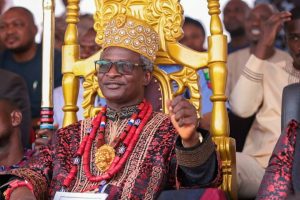
Among the Idoma People, the society is built on family, kinship and respect for elders. Life traditionally centres on the extended family system where several generations often live within close distance of one another. In many communities across southern Benue State, family compounds serve not just as homes but as spaces where history, discipline and values are passed down.
The basic social unit of the Idoma People is the lineage. Lineages form clans, and clans make up larger communities. Each level carries responsibility. The elders play an important role in guiding decisions, settling disputes and preserving customs. Age is associated with wisdom, and the younger members are expected to show deference in speech and conduct. Greetings, posture and even tone of voice matter in everyday interaction.
Agriculture has long informed social organization. Farming is traditionally the main occupation, with yam, cassava, maize and rice among common crops. Farming seasons influence community rhythms. Planting and harvest periods are often accompanied by communal labour, shared meals and thanksgiving gatherings. These activities strengthen bonds among families and neighbours.
Marriage is another central pillar of the Idoma society. It is not seen as a union between two individuals alone but, rather, as a connection between families. Traditional marriage rites usually involve formal introductions, negotiation of bride wealth and symbolic gift exchanges. Extended family members participate actively by offering advice and ensuring that cultural protocols are observed. Through marriage, alliances are formed and community ties are deepened.
Age grade systems also exist in many Idoma communities. These are groups formed by individuals within a similar age range who work together on community projects, social events and development efforts. Age grades may assist in maintaining public spaces, organizing festivals or supporting members during times of need. This system encourages cooperation and shared responsibility.
Traditional Leadership Structure
Leadership among the Idoma People operates at both local and central levels. At the village or district level, traditional rulers and chiefs oversee community affairs. These leaders are often selected based on lineage, customary law and community consensus. They handle land matters, mediate disputes and serve as custodians of tradition.
At the apex of traditional authority stands the Och’Idoma who is the paramount ruler of the Idoma nation. The institution of the Och’Idoma was formalized during the colonial era as part of the indirect rule system introduced by the British administration. The Och’Idoma serves as the head of the Idoma Area Traditional Council and represents the cultural unity of the Idoma People. The palace is located in Otukpo which is widely regarded as the cultural headquarters of the Idoma.
While the Och’Idoma holds symbolic and cultural authority, governance in modern Nigeria operates under constitutional law. Traditional rulers, today, work alongside elected officials, and contribute to cultural preservation, peacebuilding and community development rather than exercising political control.
Social Values and Community Life
Several values stand out in Idoma society. Respect for elders is deeply rooted. Hospitality is highly regarded, and visitors are often welcomed with food and warmth. Hard work, honesty and loyalty to family are also emphasized. These values are reinforced through proverbs, folktales and everyday instruction.
Religious life, whether traditional or Christian also influences social behaviour. Ancestral reverence under the Alekwu belief system historically guided moral conduct while Christianity now plays a major role in shaping ethical teachings for many Idoma families.
Modern education, urban migration and exposure to national media have introduced new dynamics into Idoma society. Many young Idoma professionals live and work in cities such as Abuja, Lagos and Port Harcourt. Yet ties to their ancestral towns remain strong. Cultural festivals, burial rites and traditional marriages often draw large numbers of people back home with the aim of strengthening a shared sense of identity.
Society among the Idoma People is, therefore, a blend of continuity and adaptation. Traditional leadership structures remain respected. Family bonds remain strong. At the same time, the community continues to engage with the wider Nigerian society. Through this balance, the Idoma People maintain a clear and enduring sense of who they are.
Beliefs and Spiritual Life
For the Idoma People, spiritual life has always been closely connected to family, morality and community order. Before the arrival of Christianity, traditional religion guided daily conduct, social responsibility and the relationship between the living and the unseen world. Even today, elements of this belief system remain part of cultural memory across southern Benue State.
The Alekwu Ancestral Belief System
At the centre of traditional Idoma religion is the belief in Alekwu. Alekwu refers to ancestral spirits who are believed to watch over their descendants. Among the Idoma People, the ancestors are not considered distant or forgotten. They are seen as active moral guardians who protect families, bless good conduct and punish wrongdoing.
The Alekwu belief system teaches that the spirits of departed elders continue to exist and remain interested in the affairs of the living. If a person lives uprightly, honours family obligations and respects community laws, the ancestors are believed to offer protection and favour. If someone violates moral codes, the ancestors may bring misfortune or illness as correction.
This system of belief helped to maintain order long before formal courts or modern institutions were introduced. Oaths, conflict resolution and major decisions were often made with reference to ancestral authority. Fear of spiritual consequences encouraged honesty and loyalty within families and clans.
Rituals and Sacred Practices
Traditional rituals among the Idoma People often involve offerings, prayers and symbolic acts carried out at the shrines or family compounds. The elders or designated custodians lead these rites. Animals, food or drinks may be presented as offerings during thanksgiving ceremonies or when seeking guidance.
One of the most significant cultural events linked to ancestral belief is the Aje Alekwu festival. During this festival, communities gather to honour their ancestors, seek blessings and celebrate cultural continuity. The event usually features music, dance and ritual performances that remind the younger ones of their spiritual heritage.
It is important to note that while traditional practices remain respected, the intensity of participation varies across communities today. In some areas, such rituals are still actively observed. In others, they are remembered more as cultural heritage than as daily spiritual practice.
The Influence of Christianity
Christianity began spreading among the Idoma People in the late nineteenth and early twentieth centuries through missionary activity during the colonial era. Churches established schools and medical missions which encouraged many families to embrace the Christian faith.
Today, a large majority of Idoma People identify as Christians. Catholic, Anglican and Pentecostal churches are widely present across Idoma communities. Sunday worship, church celebrations and Christian marriage ceremonies now form an important part of social life.
However, the introduction of Christianity did not completely erase traditional beliefs. In many cases, there is a blending of cultural respect for ancestry with Christian doctrine. While formal worship may take place in churches, family elders may still speak of ancestral presence with reverence. Cultural festivals tied to identity continue, even among strongly Christian families.
Moral Values and Spiritual Identity
Whether expressed through traditional belief or Christian teaching, spirituality among the Idoma People emphasizes moral living. Honesty, respect for elders, faithfulness in marriage and loyalty to community are central virtues. These values are taught through sermons, proverbs and everyday example.
Spiritual life also influences naming practices, burial rites and thanksgiving ceremonies. Funerals, in particular, are major events. They combine mourning with celebration of a life lived and often include both church services and cultural observances. This way, belief and tradition meet in practical ways that sustain communal bonds.
For the Idoma People, spirituality is not confined to formal rituals. It is present in greetings, in gratitude for harvest, in the respect shown to elders and in the belief that life continues beyond death. Even as society becomes more modern, the spiritual heritage of the Idoma remains a strong thread in their collective identity.
Traditions and Customs
The Idoma People maintain a rich landscape of traditions and customs that shape daily life, community relationships and cultural identity. Across southern Benue State, these practices are passed from one generation to the next through storytelling, observation and participation in social rituals. They define how families interact, how communities celebrate life, and how morality and respect are maintained.
Family and Kinship
Family forms the backbone of Idoma society. The extended family system is common, with grandparents, parents, children, aunts, uncles and cousins often living close together. Elders hold authority and are deeply respected. They guide decision-making, settle disputes and preserve family history. The younger members are expected to show respect through proper greetings, attentive listening and adherence to family rules.
Marriages are central to Idoma social structure. Traditional marriage is considered a union not just of two individuals but of entire families. The process usually begins with a formal introduction, followed by negotiation of bride wealth, and symbolic gifts exchanged between the families. Gifts may include money, livestock, or items of cultural significance such as a rooster, as a gesture of goodwill and respect. Community members often participate by offering advice and support.
Naming ceremonies are another important custom. When a child is born, families select names that reflect heritage, circumstances of birth, or desired traits for the child. These ceremonies are often accompanied by prayers, music and feasting.
Social Organization and Age Grades
Idoma communities traditionally use age grade systems to organize social responsibilities. People born within the same period often form a group that works together on community projects, enforces local rules, and participates in festivals. Age grades help to foster a sense of belonging, encourage teamwork and provide a platform for civic responsibility from a young age.
Social values such as honesty, loyalty, hard work and respect for elders are reinforced through these systems. Oral proverbs and folktales are used to teach lessons, correct behaviour and instill wisdom. This method of informal education has been a central feature of Idoma life for generations.
Marriage and Family Rituals
Marriage customs among the Idoma People are rich in symbolism. Before the bride and groom unite, families observe rituals that honour both the ancestors and community norms. After dowry negotiation, public celebrations mark the union. Music, dance and communal feasting accompany the event. These practices reinforce bonds between families and strengthen community cohesion.
Funeral rites are also elaborate. They serve to honour the deceased while affirming social unity. Ceremonies may include processions, traditional music, dance, and speeches from family elders. Burial practices vary, depending on status, age and family traditions, but they consistently reflect respect for ancestry and the continuity of lineage.
Festivals and Community Celebrations
Festivals play a vital role in preserving Idoma customs. Community members gather to celebrate harvests, honour the ancestors or mark important social milestones. Events like the Ogirinya dance festival showcase traditional music, elaborate costumes, and energetic dancing. These festivals offer young people opportunities to learn traditional skills and connect with their cultural heritage.
Music and dance are inseparable from Idoma tradition. Instruments such as drums, xylophones and flutes provide rhythms for storytelling, religious ceremonies, and public entertainment. Through these performances, the community not only celebrates life but also transmits cultural knowledge in a participatory and memorable way.
Hospitality and Everyday Customs
Hospitality is highly valued by Idoma People. Visitors are welcomed with food, drink, and warmth as a reflection of a belief that community and respect are expressed through generosity. Daily interactions, greetings, and social etiquette reinforce the importance of politeness, consideration, and maintaining harmony.
Even as modern life introduces new influences, Idoma families continue to observe many of these traditions. They are evident in rural villages and urban centres alike, from the preparation of traditional meals to the celebration of rites of passage. Customs may adapt with time but the underlying principles of respect, family cohesion, and cultural identity remain.
Through their traditions and customs, the Idoma People sustain a strong sense of who they are. These practices connect them to their ancestors, provide moral guidance, and create a shared cultural language that unites communities across generations.
Festivals, Music and Dance
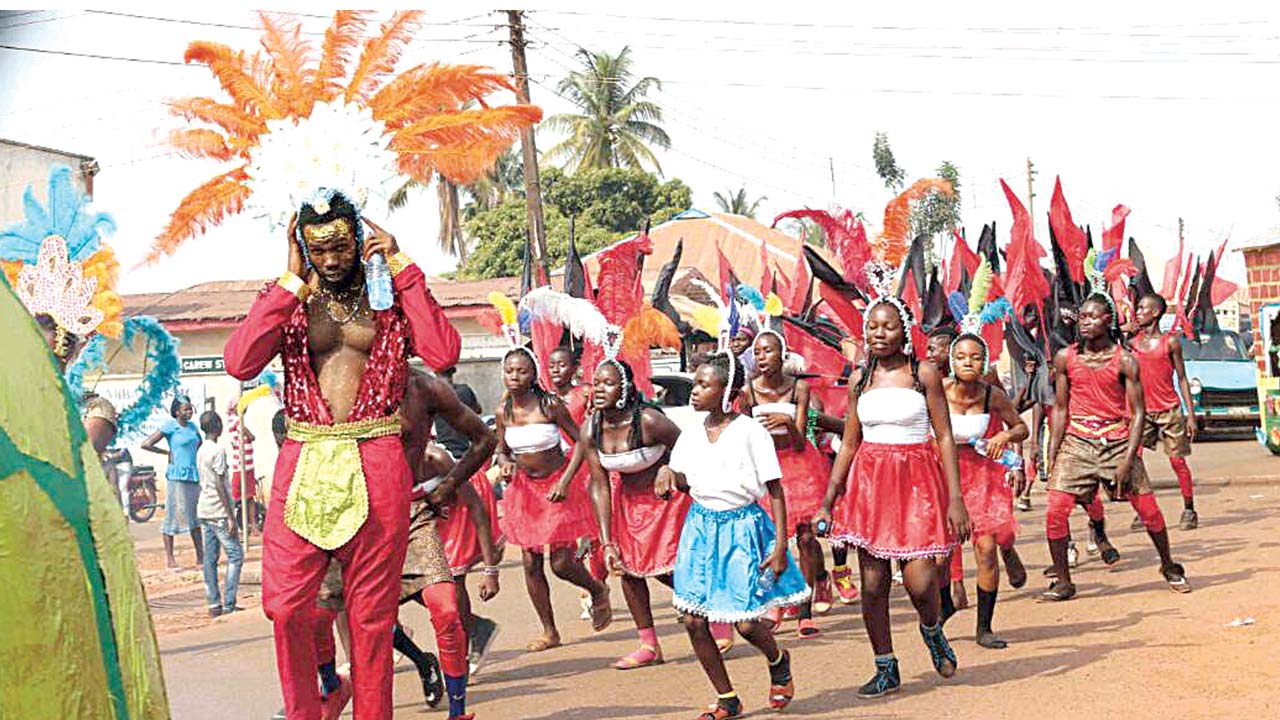
Festivals, music, and dance are vibrant expressions of the culture of the Idoma People. They are living traditions that bring communities together, preserve heritage, and pass knowledge from one generation to the next. In Idoma towns and villages across Benue State, festivals create spaces where history, spirituality, and social life converge.
One of the most important celebrations among the Idoma People is the Aje Alekwu festival. This event honours ancestral spirits and involves offering prayers and symbolic gifts to Alekwu. During the festival, families and communities come together to thank the ancestors for protection, guidance, and blessings. It is a time of reflection and cultural affirmation that connect the living with their spiritual heritage.
Another notable celebration is the Idoma International Carnival, a more contemporary festival that highlights the rich diversity of Idoma culture. It features parades, elaborate costumes, traditional dances, and performances that attract visitors from within and outside Nigeria. The carnival is a platform to showcase cultural pride and promote tourism and community engagement.
Music is integral to every festival and communal event. Drums, xylophones, flutes, and rattles provide the rhythmic backbone for traditional songs. These songs often serve multiple purposes such as storytelling, moral instruction, and entertainment. Elders use music to teach the younger members about history, social values, and the significance of customs to ensure that knowledge is passed down in a memorable way.
Songs are performed during farming cycles, weddings, funerals, and initiation rites. Each melody and rhythm communicates meaning. For example, some drum patterns signal the start of a communal work session, while others accompany dances that tell historical or moral stories. Music is also a form of praise that honours community leaders, elders, or visiting guests.
Dances are a hallmark of Idoma people’s festivals and communal life. The Ogirinya dance is one of the most famous traditional performances. It is an energetic and intricate dance involving rhythmic footwork, jumps, and coordinated group movements. Ogirinya is often performed during festivals, weddings, and important communal events to demonstrate unity, skill, and cultural pride.
Other dances accompany specific rituals such as marriage ceremonies or ancestral commemorations. These performances are not only artistic expressions but also educational tools. They communicate values, recount historical events, and reinforce community cohesion.
Food and Traditional Cuisine
Food is a cornerstone of the Idoma People’s culture that links daily life to history, family, and community. Traditional meals are not just about sustenance, they are a way to celebrate heritage, mark milestones, and bring people together. In Idoma towns across Benue State, the kitchen is a space where culture is preserved as much as it is shared.
The most iconic dish among the Idoma People is Okoho soup. This unique soup is made from the slippery stems of the Cissus populnea plant and is typically cooked with smoked fish, bush meat, or chicken. Okoho soup is usually served with pounded yam, cassava fufu, or other local staples. Its slimy texture and distinctive flavour make it instantly recognizable. More than a dish, it is a symbol of Idoma identity often served at weddings, festivals, and other special occasions.
Other popular dishes include Acha porridge made from acha grains, and pounded yam with vegetable soups. These meals often accompany celebrations or communal gatherings as a way of strengthening social bonds and hospitality. Many traditional recipes are passed down through families, with each household adding its own touch or secret ingredient.
Meal times are highly social in Idoma culture. Families and neighbours frequently eat together, especially during festivals, marriages, and harvest celebrations. Sharing food is considered a mark of respect and unity. Visitors are welcomed with dishes like Okoho soup, a gesture that reflects the community’s warmth and generosity.
Preparation of traditional meals also involves collaboration. Women often lead the cooking while children and other family members assist with tasks such as fetching ingredients, pounding yam, or stirring large pots. This collective effort strengthens family bonds and transmits culinary knowledge across generations.
Clothing and Identity
Clothing among the Idoma People does more than covering the body. It is a symbol of identity, status, and cultural pride. Across Benue State, attire communicates belonging, occasion, and respect for tradition.
For formal occasions, festivals, and community events, the Idoma People often wear garments that are rich in colour and symbolism. Men traditionally wear wrappers with long shirts, sometimes, adorned with beads or caps. Women may wear blouses and skirts paired with wrappers, head ties, and accessories that complement the outfit. These ensembles are especially elaborate during weddings, funerals, and cultural festivals.
A distinctive feature of modern Idoma ceremonial clothing is the use of red and black stripes. Red represents strength, vitality, and bravery while black signifies the earth, ancestry, and reverence for elders. These colours are prominently displayed during dances, festivals, and events where cultural identity is celebrated.
Beads are an important component of Idoma people’s attire. They are used as necklaces, bracelets, or waistbands and often indicate social status, marital status, or age grade membership. In some communities, special bead designs are worn only during certain festivals or rites of passage. Accessories complement clothing in expressing individuality while affirming cultural belonging.
Beyond aesthetics, clothing communicates social roles and group identity. For example, the age grade or clan affiliation may be reflected in the choice of fabric, colour, or accessory style. Chiefs, elders, and community leaders often wear distinctive garments that signal authority and respect.
Clothing also serves as a bridge between tradition and modernity. While everyday attire may be influenced by contemporary fashion, ceremonial clothing preserves ancestral symbolism and cultural memory. The young Idoma people still wear traditional garments during festivals and important family events with the goal of ensuring continuity of cultural expression.
Modern Identity and the Future
The Idoma People are navigating a unique balance between preserving tradition and embracing modernity. While their culture, language, and customs remain strong in southern Benue State, many Idoma individuals live and work in cities across Nigeria and abroad. This dynamic has defined a modern Idoma identity that values heritage while engaging with contemporary life.
Education has played a significant role in forming the modern Idoma identity. Many young people attend schools in Otukpo, Makurdi, Abuja, Lagos, and other major cities. This exposure to diverse ideas, technology, and professional opportunities has expanded their worldview. Many pursue careers in medicine, law, engineering, business, and the creative arts while maintaining ties to their ancestral communities.
Urban migration has also encouraged multilingualism. While English dominates formal communication, many Idoma individuals continue to speak the Idoma language at home and during cultural gatherings. This bilingual or multilingual environment allows them to function effectively in modern society while retaining a connection to their roots.
Despite modern influences, the Idoma People continue to preserve their traditions. Cultural festivals, music, dance, cuisine, and clothing are actively maintained, especially in ceremonial and family settings. Organizations, community groups, and cultural associations work to document oral histories, promote language education, and support traditional arts. These efforts ensure that the younger people understand and value their heritage.
Modern technology has also played a role in preservation. Social media, websites, and digital media platforms allow Idoma communities to share cultural events, historical information, and language lessons with wider audiences. Online forums and YouTube channels, for instance, feature traditional dances, cooking tutorials, and storytelling as a way of making culture accessible to both locals and the diaspora.
The Idoma People face challenges common to many indigenous communities. Urbanization, migration, and global cultural influences can weaken language use and traditional practices. The younger generations may prioritize modern lifestyles over ancestral customs. However, these challenges also create opportunities for innovation.
For example, youth-led initiatives often combine technology with cultural education. Schools incorporate local history and language into the curriculum. Cultural festivals attract national attention and tourism. Businesses produce Idoma-inspired art, fashion, and food products. These initiatives not only preserve culture but also create economic and social value.
The future of the Idoma People lies in a dynamic interplay between tradition and modernity. By valuing education, engaging with technology, and maintaining strong family and community ties, the Idoma poeple can navigate change, even while they sustain their identity. The language, festivals, music, and spiritual practices that define the Idoma People remain living elements of daily life, not relics of the past.
In a rapidly evolving Nigeria, the Idoma People are proof that culture is adaptable, resilient, and enduring. Their story shows that modernity does not require abandoning tradition. Instead, it offers opportunities to celebrate, preserve, and share a rich heritage with the world. The Idoma People continue to write their history, one that honours the past, lives fully in the present, and looks confidently toward the future.
In Conclusion …
The Idoma People of Nigeria represent a community with a deep sense of history, rich cultural traditions, and a resilient identity. From their ancestral roots in southern Benue State to their modern presence in cities across Nigeria and abroad, the Idoma people have maintained a unique balance between continuity and change. Their language, festivals, music, dance, cuisine, clothing, and spiritual practices all contribute to a rich cultural identity that has endured for generations.
Understanding the Idoma People is not just about tracing history or documenting customs. It is about appreciating a way of life that values family, community, respect for elders, and moral responsibility. Their traditional institutions demonstrate the importance of governance, unity, and shared responsibility. Meanwhile, festivals, music, and culinary practices reveal a people who celebrate life with joy, creativity, and connection.
As the Idoma People continue to navigate the modern world, they face the challenges of urbanization, globalization, and generational change. Yet their commitment to preserving language, culture, and values ensures that their identity remains strong. By embracing education, technology, and new opportunities while honouring ancestral traditions, the Idoma People exemplify resilience, adaptability, and pride in heritage.
The story of the Idoma People is a story of continuity, celebration, and belonging. It is a reminder that culture is lived, experienced, and shared. For anyone seeking to understand the diversity and richness of central Nigeria, the Idoma offer a profound example of how history, tradition, and modern life can coexist in harmony.
References
- https://en.wikipedia.org/wiki/Idoma_people
- https://www.britannica.com/topic/Idoma
- https://www.iambenue.com/benue-state/ethnic-composition/idoma-people-of-benue-state/
- https://articles.connectnigeria.com/brief-tour-idoma/
- https://www.pulse.ng/story/idoma-a-brief-walk-into-the-life-of-one-of-africas-humblest-people-2024080105005319602
- https://nico.gov.ng/idoma-international-carnival/
- https://en.wikipedia.org/wiki/Okoho
You might want to check this out …