




African Culture and Traditions
Towns with Hereditary Monarchies in Anambra State

“Hereditary monarchies in Anambra State” explores towns where traditional leadership is hereditary and not rotational, based on available local documentation, news reports and historical records.
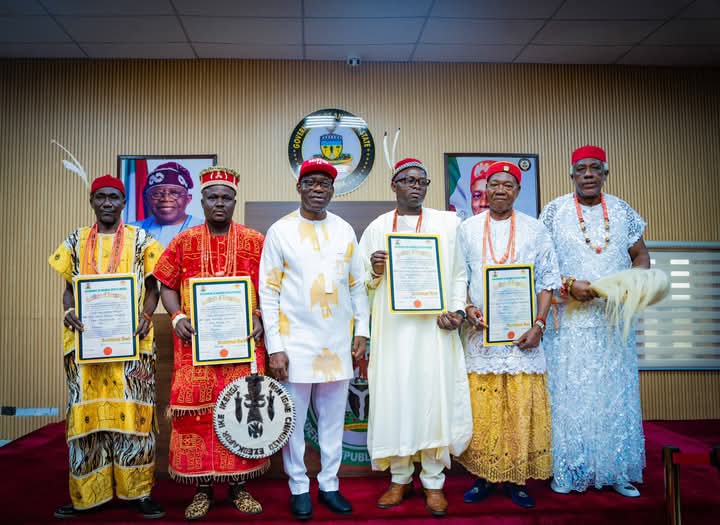
Anambra State Governor Presents Certificates to New Monarchs
Hereditary monarchies in Anambra State are a fascinating part of Igbo traditional governance where leadership is passed down within a single family or dynasty rather than rotated among different lineages. Unlike towns that practice rotational kingship, these communities maintain a steady line of rulers, often tied to ancient founding families, ritual responsibilities and local customs.
This article explores the towns in Anambra State with documented hereditary monarchies, explains why some communities preserve this tradition, highlights notable ruling dynasties and discusses challenges and changes affecting succession.
Based on verified local documentation, historical records and reputable news sources, this guide provides a clear, fact-checked overview of hereditary rulership in Anambra, making it an essential reference for anyone interested in Igbo culture, traditional leadership and the history of Anambra State.
What “Hereditary Monarchy” Means in Anambra State
When we talk about hereditary monarchies in Anambra State, we mean a traditional leadership system where the kingship, whether the Igwe, Obi, or Eze is passed down within a particular family or ruling dynasty.
In these towns, the throne is not rotated among multiple lineages. Instead, succession is usually determined by family rules, seniority, or primogeniture. This hereditary system ensures continuity of leadership, preserves ancestral and ritual traditions and reinforces the authority of founding families.
Understanding this distinction is key to appreciating how certain Anambra communities maintain their traditional governance and why hereditary monarchies remain a defining feature of their cultural identity.
Towns with Documented Hereditary Monarchies in Anambra State
Here, we explore several hereditary monarchies in Anambra State that are well documented in historical records, local news, or community sources. Each town listed has a traditional rulership system in which the throne is passed down within a particular lineage rather than rotated among unrelated families.
Nnewi – The Nnofo Dynasty

Hereditary Monarchies in Anambra State – Igwe Kenneth Onyemeke Orizu III
Nnewi Kingdom located in Anambra State, practices a patrilineal hereditary monarchy under the Nnofo Royal House. According to the record, there have been 20 monarchs since the founding of the kingdom. His Royal Highness Igwe Kenneth Onyemeke Orizu III is the 20th Igwe of Nnewi and a member of the Nnofo house.
Past rulers include Igwe Iwuchukwu (Eze Ifekaibeya) who reigned from 1891 until 1904 and was explicitly from the Nnofo lineage. The Nnewi monarch is not just a political figure but a spiritual leader. According to the verified information, the Igwe holds the ofo, a symbol of both religious and political authority.
Succession to the throne is based on primogeniture, meaning, if an Igwe/Obi dies without a son, his eldest brother becomes the successor.
In Nnewi, the Igwe is “born, not made”, and his position is not open for popular election or contest outside the royal lineage.
All these details strongly underscore that hereditary monarchies in Anambra State are alive and in full practice in Nnewi and rooted in deep dynastic tradition not just with the central traditional leadership, even with that of the four quarters, clans and kindred.
Enugwu‑Aguleri – The Ezeora (Eri) Dynasty

Hereditary Monarchies in Anambra State – Ezeora Dynasty
Enugwu‑Aguleri belongs to a very ancient lineage. The Ezeora dynasty traces its origin to the legendary Eri whose descendants are central to Igbo origin stories. According to its official profile, Enugwu‑Aguleri practices hereditary traditional rulership, with the Ezeora dynasty occupying both ceremonial and political roles.
The rulers of Enugwu‑Aguleri are considered custodians of the Ovo Eri, a spiritual and historical symbol in the Eri tradition. The town is said to have produced over thirty-four traditional rulers in the past, reinforcing its long-standing dynastic monarchy.
The deep ancestral ties to Eri and the continued dominance of the Ezeora dynasty in Enugwu‑Aguleri illustrate it as one of the clear and long-lasting hereditary monarchies in Anambra State.
Awkuzu – The Aganama Family Line

Hereditary Monarchies in Anambra State – Igwe Awkuzu
Awkuzu is a town in Oyi LGA of Anambra that is reported in local media to have its Igweship restricted to the Aganama family, suggesting a hereditary system rather than a rotational stool.
In 2023, a coronation of Chief Chibuike Okafor as “Ezeaganama III” was defended by traditional kingmakers in Awkuzu. According to the Okpala Awkuzu (senior traditional elder), the Igweship stool runs in the royal family of Aganama and is not rotational.
Some community members argue that, though the government may issue recognition with certificate and staff of office, cultural legitimacy comes from the Aganama line.
The repeated mention in local media that the throne is not rotational but inherited in the Aganama family makes a strong case that Awkuzu is one of the towns that practice hereditary monarchies in Anambra State, even if it is contested.
Uga – Hereditary Obiship
Uga, in Aguata LGA of Anambra State is described in its official profile as having a traditional hereditary monarchy. Igwe Chidi Stephen Ezenwugo was recognized by the Anambra State government with certificate and staff of office as the Obi / Igwe of Uga, after a process that respected traditional rites.
Upon his coronation, a traditional New Yam Festival was held, integrating community tradition and royal rites. According to news reports, when Ezenwugo ascended the throne, some court challenges were dismissed partly on the basis that Uga’s constitution explicitly recognizes the throne as hereditary.
The government noted that the succession was peaceful and traditional processes were properly followed.
The fact that Uga’s throne is constitutionally treated as hereditary and that its succession process involved traditional rites and State recognition underscores it as one of the towns with hereditary monarchies in Anambra State.
Ogidi – Historical Amobi Dynasty (Now Legally Modified)
Ogidi in Idemili North LGA used to be one of the towns that practiced hereditary monarchies in Anambra State. It was long ruled by the Amobi family whose claim to the stool dates back centuries. In 2017, the Court of Appeal ruled that the Igweship of Ogidi is not the exclusive preserve of the Amobi family.
The court relied on the Ogidi Union constitution which stated that the throne should be open to any man from the four quarters of the town, and not just from the Amobi family.
Even though the Amobi family provided the traditional rulers for over 200 years, the court decision significantly altered how succession is legally recognized.
Ogidi is a prime example showing that while hereditary monarchies in Anambra State have deep historical roots, they are not always ironclad when challenged legally. Tradition and law can interact and change who is eligible to rule.
In summary, Nnewi stands out as one of the clearest examples of a hereditary monarchies in Anambra State, with the Nnofo family line dominating for centuries. Enugwu‑Aguleri reflects a dynastic and ritual line tied to ancient Eri traditions, emphasizing both spiritual and ancestral continuity.
Awkuzu shows how community leaders still affirm a hereditary Igweship tied to the Aganama lineage, even amid contestations. Uga combines formal government recognition with traditional hereditary customs, reinforcing the legitimacy of monarchy through both tradition and law.
However, Ogidi is a cautionary tale that even a long-standing hereditary tradition can be legally challenged and transformed by rulership unions and courts.
Key Factors That Sustain Hereditary Monarchies in Anambra State
Several consistent factors explain why hereditary monarchies in Anambra State have persisted in some communities over generations, despite social, legal and political changes. Understanding these elements helps explain the resilience of dynastic rulership in certain towns:
Founding Lineage and Ancestral Heritage
Many towns trace their origin to a single ancestor or founding family. This historical connection gives the ruling house a unique legitimacy and makes the monarchy hereditary by tradition. For example, Nnewi’s Nnofo dynasty and Enugwu‑Aguleri’s Ezeora line maintain authority because of deep ancestral roots.
Ritual and Spiritual Responsibilities
In several communities, the monarch also serves as a custodian of sacred rites. Hereditary succession ensures that these ritual duties remain within a family trained in the traditions, such as the custodianship of the Ofo in Nnewi or the Ovo Eri in Aguleri.
Palace and Kingmaker Systems
Traditional councils, kingmakers and palace protocols often restrict eligibility to a single dynasty. This structured system preserves continuity and reinforces hereditary succession in towns like Uga and Awkuzu.
Community Identity and Social Continuity
The monarchy often embodies the identity of the town or quarter. Maintaining a hereditary line strengthens communal cohesion and reinforces the sense of belonging, pride and respect for traditional authority.
Colonial and Post-Colonial Endorsements
Historical colonial policies often recognized certain ruling houses as official authorities. Many hereditary monarchies, including those in Nnewi and Enugwu‑Aguleri gained additional legitimacy during colonial and post-colonial administration, embedding hereditary succession further into local governance.
By combining historical legitimacy, spiritual significance, institutional support and community identity, these factors ensure that hereditary monarchies in Anambra State remain a defining feature of traditional governance today.
Strengths and Advantages of Hereditary Monarchies in Anambra State
Hereditary monarchies in Anambra State are not only a reflection of tradition but also offer distinct advantages that contribute to community stability, cultural continuity and effective leadership. Some of the key strengths include:
Continuity of Leadership
Hereditary succession ensures that leadership remains within a single family or lineage. This continuity minimizes frequent leadership disputes and provides a clear line of succession, as seen in Nnewi’s Nnofo dynasty and Enugwu‑Aguleri’s Ezeora line. Such stability strengthens governance and long-term community planning.
Preservation of Culture and Tradition
Because hereditary monarchs are raised within the royal family, they are often well-versed in local customs, rituals and ceremonies from a young age. This intimate knowledge allows them to safeguard cultural heritage such as traditional festivals, sacred rites and ancestral practices unique to each town.
Legitimacy and Respect
Monarchs from hereditary lines carry historical legitimacy that is widely recognized and respected by the community. Residents are more likely to accept their authority, reducing the likelihood of leadership disputes. This legitimacy is especially visible during significant events such as coronations, festivals and community decisions.
Stability in Succession Processes
In contrast to rotational or elective systems, hereditary monarchies have well-defined rules of succession within the ruling family. This structured approach reduces ambiguity about eligibility and helps prevent prolonged power struggles, as demonstrated by the smooth successions in Uga and Awkuzu.
Custodians of Sacred Duties
Many hereditary monarchs are entrusted with spiritual and ritual responsibilities which are often essential to the cultural identity of the town. By keeping succession within a single family, these important duties are preserved and executed consistently across generations.
Community Cohesion
Hereditary monarchies foster a sense of identity and belonging. When leadership is anchored in a recognized lineage, residents feel continuity in leadership and shared heritage, strengthening social cohesion and mutual respect within the town.
By offering leadership stability, cultural preservation, spiritual continuity and social legitimacy, hereditary monarchies in Anambra State serve as a cornerstone of community life. These advantages explain why many towns continue to maintain dynastic rulership alongside modern governance systems.
Challenges and Tensions in Hereditary Monarchies in Anambra State
While hereditary monarchies in Anambra State offer stability and cultural continuity, they are not without challenges. Several tensions frequently arise, reflecting both traditional complexities and modern societal pressures.
Family Rivalries and Internal Disputes
Since the throne is confined to a single lineage, succession disputes can emerge within the royal family. Competing branches often claim eligibility, leading to internal disagreements that may delay coronations or create community divisions. Historical cases in Nnewi and Awkuzu illustrate how family disagreements occasionally escalate into prolonged disputes.
Legal Challenges and Court Interventions
Some hereditary claims are contested in courts, especially when town constitutions, unions, or statutory laws are invoked. A notable example is Ogidi where the Court of Appeal ruled in 2017 that the Igweship was no longer the exclusive preserve of the Amobi family. Such interventions can redefine or limit traditional hereditary practices.
State Recognition and Government Oversight
Even when succession follows hereditary norms, State recognition is often required for legitimacy. Disputes may arise if the government delays or refuses to issue certificates of recognition, as happened in certain cases in Uga and Awkuzu. The interaction between traditional practice and modern governance can create tension.
Pressure for Inclusivity and Rotation
As communities modernize, some residents advocate for rotational systems or broader eligibility beyond a single dynasty. While intended to democratize leadership, these pressures can clash with deeply rooted hereditary traditions, creating social friction and occasional legal disputes.
Generational Gaps and Modern Expectations
Younger community members may have different expectations of leadership, including transparency, development focus and civic engagement. Hereditary monarchs who fail to adapt may face criticism or reduced influence, highlighting a tension between tradition and modern societal needs.
Essentially, despite their advantages, hereditary monarchies in Anambra State must navigate family disputes, legal challenges, State oversight and evolving community expectations. Understanding these tensions provides a more complete picture of the complexities of dynastic leadership in contemporary Igbo communities.
The Future of Hereditary Monarchies in Anambra State
The future of hereditary monarchies in Anambra State is likely to be shaped by a mix of tradition, legal frameworks and modern societal expectations. While these dynastic systems have endured for centuries, evolving political, social and cultural dynamics may influence how they function in the years ahead.
Hereditary monarchs are increasingly expected to work alongside local government structures and development agencies. Towns like Nnewi and Uga show how monarchs can retain cultural authority while collaborating with elected officials to promote community development. Maintaining this balance will be critical for the long-term relevance of hereditary monarchies.
Court decisions and State recognition have demonstrated that hereditary systems must operate within legal frameworks. Clear constitutions, union bylaws and statutory regulations will likely continue to guide succession and protect the legitimacy of hereditary monarchs, ensuring stability while preventing disputes.
Younger generations increasingly value transparency, accountability and civic engagement. Hereditary monarchs who embrace education, youth empowerment and community-driven projects will likely strengthen their authority and maintain respect among residents.
Hereditary monarchies serve as custodians of Igbo culture, festivals and rituals. Efforts to document traditions, educate younger members and promote cultural tourism may further solidify the role of hereditary rulers, ensuring that these dynasties remain relevant even as globalization introduces new ideas and influences.
Some towns may introduce hybrid systems, blending hereditary succession with advisory councils or rotational elements to accommodate broader participation. Such evolution can help hereditary monarchies remain resilient while respecting both tradition and modern societal needs.
The future of hereditary monarchies in Anambra State is likely to be one of adaptation and continuity. By balancing ancestral traditions, legal frameworks and modern expectations, these dynastic systems can continue to play a central role in community life, preserving cultural identity while meeting the challenges of contemporary governance.
In Conclusion …
Hereditary monarchies in Anambra State remain a vital part of the region’s cultural and political landscape. From Nnewi’s Nnofo dynasty to Enugwu‑Aguleri’s Ezeora line, these dynastic systems preserve centuries-old traditions, uphold spiritual responsibilities and maintain continuity in leadership.
While challenges such as family disputes, legal interventions and modern societal expectations exist, the advantages which include stability, cultural preservation and community cohesion underscore why these monarchies endure.
As Anambra communities navigate the balance between tradition and modern governance, hereditary monarchies continue to adapt, ensuring that royal lineages remain relevant and respected. The future promises both continuity and evolution, with monarchs increasingly engaging in community development, youth empowerment and cultural preservation.
Understanding these systems provides valuable insight into Igbo heritage, local governance and the unique ways towns in Anambra State maintain authority within historical family lineages. By examining both the strengths and challenges of these dynastic rules, we gain a clearer picture of why hereditary monarchies in Anambra State are, more than symbolic, living institutions that connect past, present and future generations.
References
- https://en.wikipedia.org/wiki/Igwe_of_Nnewi_kingdom
- https://en.wikipedia.org/wiki/Enugwu_Aguleri
- https://www.premiumtimesng.com/news/more-news/594238-anambra-community-shuns-traditional-ruler-designate-crowns-another.html
- https://tribuneonlineng.com/ezenwugo-emerges-new-traditional-ruler-uga-community/
- https://nnewicity.com/nnewi-the-kingdom-the-people-and-the-throne/
- https://www.vanguardngr.com/2017/05/appeal-court-ends-233-year-old-rule-amobi-family-ogidi/