

Sports
Waka Waka (This Time for Africa): Shakira’s Timeless World Cup Anthem

When the world gathered in South Africa in 2010 for the FIFA World Cup, history was already being made. It was the first time the biggest sporting event on earth would be hosted on African soil. The excitement was electric, the colors vibrant, and the sound of the vuvuzelas filled every stadium. But one cultural piece tied the whole experience together more than anything else, the official World Cup song, “Waka Waka (This Time for Africa)” by Colombian superstar Shakira featuring South African band Freshlyground.

Shakira
Fifteen years later, that song continues to live on as one of the most successful and recognizable World Cup anthems ever made. On YouTube alone, the music video has crossed 4 billion views, making it not just a football memory but a global pop phenomenon that refuses to fade away.
The Birth of a Global Anthem
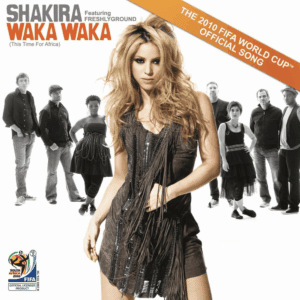
Shakira- Waka Waka (This Time for Africa)
Waka Waka (This Time for Africa) was released on May 7, 2010, just weeks before the kickoff of the World Cup. Produced by Shakira, John Hill, and the legendary team at Sony, the track combined global pop with traditional African influences. At its core, it was based on “Zangalewa,” a popular song by Cameroonian band Golden Sounds. That original tune had long been used in African military circles as a marching song, filled with chants and rhythms that captured both resilience and unity.
By adapting it, Shakira did something clever, she fused international pop music with an authentic African rhythm, giving the world a sound that felt celebratory yet rooted in the continent hosting the World Cup. The song’s chorus “Tsamina mina, eh eh, Waka Waka, eh eh” was simple, catchy, and easy for football fans from any culture to sing along to. FIFA wanted a song that could unite billions of people across languages, and Waka Waka delivered exactly that.
Click here to watch the video on YouTube
The Music Video, A Celebration of Football and Culture
If the song was powerful, the music video amplified it to another level. Directed by Marcus Raboy, the video featured Shakira dancing with her signature hip movements, joined by Freshlyground’s lead singer Zolani Mahola. Interwoven were clips of children playing football, dancers in colorful African attire, and archival footage of football legends from past World Cups, from Pelé to Maradona.
The choice of visuals made it more than just a music video, it was a tribute to the joy of football itself. Young fans could see themselves in the children kicking a ball barefoot. Older fans relived golden moments of the game through iconic highlights. And viewers everywhere felt the African energy in the costumes, rhythms, and communal dancing.
It was this mix of Shakira’s global stardom, Freshlyground’s African authenticity, and the emotional power of football nostalgia that turned the video into a timeless hit.
Shakira on the World Stage During the Opening and Closing Ceremonies
The magic of Waka Waka wasn’t confined to screens. Shakira brought the anthem to life during both the opening ceremony and the closing ceremony of the 2010 FIFA World Cup in Johannesburg.
At the opening ceremony on June 10, 2010, she performed a medley of hits including Hips Don’t Lie before bursting into Waka Waka. Dancers in African attire filled the stage, and Freshlyground joined her to deliver their parts live. Shakira’s zebra-print outfit, designed by Roberto Cavalli, added flair to the spectacle.

Shakira performing at the opening celebration concert for the 2010 FIFA World Cup at the Orlando Stadium on June 10, 2010 in South Africa. (Photo Credit: Stuart Franklin/Getty Images)
Then, at the closing ceremony on July 11, just before the final between Spain and the Netherlands, Shakira again took the stage. This time, the energy was even higher, the whole world was tuned in to the grand finale. Under the bright lights, she moved effortlessly with the dancers, belting out Waka Waka with the same energy that made it unforgettable. For millions watching worldwide, the performance became inseparable from the World Cup experience itself.
Commercial Success Around the World
The song was not just an event anthem, it became a commercial juggernaut. In Europe, it dominated charts hitting #1 in Spain for a record 17 consecutive weeks, and ruling Italy’s charts for 16 weeks. It topped the charts in over 15 countries, from France to Switzerland, and became Shakira’s highest-selling single in several markets.
By the end of 2010, Waka Waka had sold millions of copies worldwide and was certified multi-platinum in multiple countries. In Brazil, France, and Germany, it earned diamond or multi-platinum certifications. For a World Cup song, these were extraordinary numbers, few event anthems ever achieve long-term mainstream success, but Waka Waka broke the mold.
A Song That Refuses to Age
The real story of Waka Waka begins after 2010. Most World Cup songs shine brightly for a few weeks and then fade as the tournament ends. But Waka Waka refused to disappear.
On YouTube, the video has surpassed 4 billion views, making it one of the platform’s most watched music videos ever. That’s more than many recent global hits, a testament to its staying power. Every year, as the football season heats up or when the World Cup approaches, new generations rediscover the song. Children who weren’t even born in 2010 now learn the chorus on TikTok or at school sports events.
On Spotify and other streaming platforms, it remains among Shakira’s most streamed songs. During football tournaments, the streams surge again, showing its seasonal but reliable popularity.
Why It Endures
So why has Waka Waka lasted when so many other anthems fade? Several reasons stand out such as:
- Universality – The lyrics are simple, optimistic, and inclusive. Anyone can sing along, no matter their native language.
- Cultural authenticity – By building on “Zangalewa” and working with Freshlyground, the song respected African roots instead of feeling like an outsider’s pop insert.
- Shakira’s performance – Her star power, charisma, and stage presence gave the song global appeal.
- Football nostalgia – Every time fans hear it, they remember the 2010 World Cup — the vuvuzelas, the stadiums, the drama of Spain lifting their first trophy.
- Digital amplification – With YouTube and streaming services, songs never “die” anymore. They’re always a click away, and algorithms keep resurfacing them to new listeners.
Legacy After 15 Years
In 2025, fifteen years after its release, Waka Waka is more than just a song, it’s a cultural landmark. It symbolizes the unity of the 2010 World Cup, the pride of Africa hosting for the first time, and the joy football brings to billions.
It remains the most successful World Cup song of all time, both in commercial terms and cultural memory. Unlike many event songs tied to a specific year, Waka Waka continues to live in playlists, parties, stadiums, and YouTube feeds around the world.
In fact, during every new World Cup cycle, fans online revisit the song. Ahead of Qatar 2022, Waka Waka trended again as people compared it to the new anthem. And in 2026, when the tournament is jointly hosted by the USA, Mexico, and Canada, you can be sure the song will rise again in global streams.
Shakira herself has said that performing Waka Waka in South Africa was one of the highlights of her career. And for the millions who still dance and sing along to it, the song is proof that music, when done right, can transcend borders, languages, and even decades.
Conclusion
Waka Waka (This Time for Africa) wasn’t just a song for the 2010 World Cup, it became the heartbeat of a historic moment. With its infectious rhythm, unforgettable video, and Shakira’s electrifying performances, it captured the spirit of football and the pride of Africa. Fifteen years later, its billions of views and streams show that it’s more than a memory. It’s a living anthem, one that continues to unite the world through dance, song, and the beautiful game.
Read More: Did you know that the Nigerian Pillar of Sports is from Nnewi?