


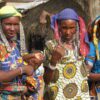
Nigerian Ethnic Groups
The Annang People of Akwa Ibom, Nigeria: Full History, Culture, Traditions, Language and Facts

Annang people are an ethnic group in Southern Nigeria with a rich history, culture, traditions, language, spiritual beliefs, festivals, arts, and modern identity that continue to enrich Nigeria’s cultural space.

The Annang people are one of the major ethnic groups in southern Nigeria with deep roots in Akwa Ibom State and bound together by language, ancestry, and shared memory. Long before modern state boundaries were drawn, Annang communities had already built thriving settlements, farmed fertile land, traded across regions, and developed a cultural system that still guides daily life today. Their story is not hidden in legend alone. It lives in spoken proverbs, carved wood, woven raffia, sacred shrines, bustling markets, and annual festivals that bring the entire towns to life.
To understand the Annang people is to step into a world where family lineage matters, where the elders hold respected authority, and where the Annang language carries history in every phrase. From Ikot Ekpene, often called the cultural heart of Annangland, to villages spread across Abak, Oruk Anam, Essien Udim, and beyond, the identity of the Annang people remains strong and clearly defined. They are often mentioned alongside their Ibibio and Efik neighbours. Yet, they maintain a distinct heritage that deserves careful attention and accurate documentation.
This article offers a detailed, fact-checked exploration of the Annang people, their origins, traditions, spiritual beliefs, festivals, arts, economy, and modern presence in Nigeria. Whether you are researching Annang history, learning about Annang culture, or seeking reliable information about the Annang language and customs, you will find clear and verifiable insights here.
The goal is simple. To present the Annang people as they are. Grounded in history. Rich in tradition. Alive in the present.
Who Are the Annang People?
The Annang people are a distinct ethnic group in southern Nigeria found mainly in the western part of Akwa Ibom State. They are one of the major cultural groups in the state, alongside their close neighbours, the Ibibio, Efik, and Oron. Although they share certain historical and linguistic links with these groups, the Annang people maintain a clearly defined identity rooted in their own language, traditions, and ancestral land.
Geographically, the Annang people occupy eight local government areas in Akwa Ibom State. These include Ikot Ekpene, Abak, Essien Udim, Oruk Anam, Etim Ekpo, Obot Akara, Ika, and Ukanafun. Ikot Ekpene is often regarded as the cultural and historical centre of Annangland. For generations, these communities have lived in close connection to the land, and have built villages structured around extended families and clan systems.
The Annang language is central to who they are. It belongs to the Niger-Congo language family and is part of the Lower Cross subgroup within the larger Benue-Congo branch. While it is closely related to Ibibio, it has its own vocabulary, pronunciation patterns, and expressions that mark it as a separate language. In everyday life, the language carries stories, proverbs, moral lessons, and ancestral wisdom that bind the Annang people together.
Traditionally, the Annang society is organized around family lineages and village councils. The elders play an important role in decision-making, conflict resolution, and preservation of customs. Social life is built on cooperation, respect for age, and strong kinship ties. Farming, especially of yams, cassava, and palm produce has historically been the backbone of their economy.
Spiritually, the Annang people historically believed in a supreme deity known as Abasi, along with reverence for the ancestors and spiritual forces connected to nature. Today, Christianity is widely practiced. Yet, many cultural values and ceremonial traditions continue to draw from the older belief systems.
In simple terms, the Annang people are a community defined by shared ancestry, a common language, a rich cultural system, and a deep attachment to their homeland in Akwa Ibom State. Their identity is not just historical. It is living, practiced daily in festivals, family gatherings, storytelling, farming, worship, and community leadership.
Origins and Early History of the Annang People
The origins and early history of the Annang people are rooted in oral tradition, regional migration patterns, and historical research on the Lower Cross River area of southern Nigeria. Like many ethnic groups in the Niger Delta region, their earliest beginnings are preserved more in spoken memory than in written records. Yet, when oral accounts are placed alongside linguistic and anthropological studies, a clearer picture begins to form.
Scholars generally classify the Annang people within the Lower Cross subgroup of the Benue-Congo branch of the Niger-Congo language family. This linguistic connection links them to neighbouring groups such as the Ibibio and Efik, and suggests a shared ancient ancestry before gradual separation into distinct communities. Language evidence is often one of the strongest tools historians use to trace early movement and settlement patterns in southern Nigeria.
Annang oral traditions speak of ancestral migrations into the present-day western areas of Akwa Ibom State. While specific migration dates are difficult to fix with precision, historians agree that the Annang were established in this region long before European contact in the fifteenth century. By the time early European traders arrived along the Cross River and coastal areas, inland communities such as the Annang were already organized into stable village settlements with functioning political and social systems.
The Annang homeland developed across fertile forest zones that supported farming and trade. Early communities were built around extended family compounds. Clans grew into villages, and villages formed networks tied together by kinship, trade routes, and shared spiritual practices. Agriculture played a central role from the beginning. Yam cultivation in particular held both economic and symbolic importance, as yams were associated with prosperity and communal well-being.
The pre-colonial Annang society was decentralized. There was no single king over all Annang people. Instead, authority rested within family heads, lineage leaders, and councils of elders. Decision-making was communal. Matters affecting the village were discussed openly, and consensus was valued. Age-grade associations also played important roles in maintaining order and carrying out community projects.
Interaction with neighbouring groups influenced early Annang history as well. Trade relationships connected them with Ibibio, Efik, and other Cross River communities. Goods such as palm produce, farm crops, local crafts, and later European trade items moved along established routes. These exchanges encouraged cultural contact while still allowing the Annang people to maintain their own distinct identity.
The arrival of British colonial administration in the nineteenth and early twentieth centuries marked a turning point. Colonial rule introduced new political structures, taxation systems, missionary activity, and formal education. Missionaries spread Christianity across Annangland, and many communities gradually adopted the new faith while continuing to observe certain traditional customs. Colonial boundaries also influenced how ethnic identities were categorized and recorded in official documents.
Despite these external influences, the Annang people preserved key elements of their early heritage. Their clan-based structure, language, traditional festivals, and reverence for ancestry continued to define community life. Even today, many villages can trace their origins back to several generations through oral genealogies carefully maintained by elders.
In understanding the origins and early history of the Annang people, it is important to recognize the balance between oral tradition and academic study. While written records from the pre-colonial era are limited, linguistic classification, regional history, and consistent oral accounts together confirm that the Annang have long occupied their present homeland in western Akwa Ibom State.
Their early history is not a single event or migration story. It is a gradual process of settlement, adaptation, trade, and community building that laid the foundation for the Annang identity that continues till today.
Where Are the Annang People Located?

The Annang people are located in the southern part of Nigeria, specifically in Akwa Ibom State. Their homeland lies in the western and north-western areas of the state, and forms a clearly defined cultural region often referred to as Annangland.
Administratively, the Annang people occupy eight local government areas in Akwa Ibom State.. Together, these areas form the heart of Annang territory. The land is largely rainforest and semi-forest zone, with fertile soil that has supported farming for generations.
Ikot Ekpene is widely regarded as the cultural and historical centre of the Annang people. The town gained prominence during the colonial period as a commercial hub, especially known for raffia craft and trade. Even today, it remains an important urban centre within Annangland and a key location for cultural events such as the Annang Festival of Arts and Culture.
Geographically, Annangland is bordered by Ibibio communities to the east, Igbo communities of Abia State to the north and west, and other ethnic groups within Akwa Ibom State to the south. This position has historically encouraged trade and interaction while still allowing the Annang people to preserve their own language and traditions.
Beyond Akwa Ibom State, many Annang people now live in other parts of Nigeria due to education, employment, and urban migration. Cities such as Uyo, Port Harcourt, Lagos, and Abuja have significant Annang populations. However, strong ties to ancestral villages remain important. Many families return home for festivals, burials, marriage ceremonies, and major community gatherings.
In simple terms, the Annang people are firmly rooted in western Akwa Ibom State where their towns, farmlands, shrines, and family compounds continue to define their cultural landscape. While modern mobility has taken many individuals beyond Annangland, their identity remains closely linked to this specific region in southern Nigeria.
The Annang Language
For the Annang people, language is more than a tool for conversation. It is the heart of identity, memory, and belonging. The Annang language carries family histories, moral lessons, praise poetry, jokes, warnings, and prayers. It is spoken daily in homes, markets, village squares, and community gatherings across Annangland.
Linguistically, Annang belongs to the Niger-Congo language family which is one of the largest language families in the world. Within this broad group, it falls under the Benue-Congo branch and more specifically the Lower Cross subgroup. This classification links the Annang language to neighbouring languages such as Ibibio and Efik. Yet, Annang is distinct in pronunciation, vocabulary, and certain grammatical patterns. Linguistic studies of the Lower Cross languages confirm these close but separate relationships.
Across the eight local government areas that make up Annangland, the language is spoken with slight dialect differences. These variations may affect tone, word choice, or accent. But the speakers generally understand one another without difficulty. The shared language strengthens unity among the Annang people and allows for local identity within different towns and villages.
Oral tradition plays a major role in the preservation of Annang language. Proverbs are highly valued. A well-placed proverb can settle disputes, offer advice, or teach patience and humility. Storytelling sessions, especially in the evenings in the earlier generations passed down community history and moral instruction. These spoken forms of literature helped to preserve Annang knowledge long before formal writing systems became common.
During the colonial period, Christian missionaries contributed to the development of written forms of Annang through Bible translations and religious materials. This encouraged literacy in the local language alongside English. Today, English is widely used in schools and official communication, but Annang remains the primary language of home life in many communities.
In recent years, cultural organizations and scholars have emphasized the importance of preserving the Annang language. There is growing awareness that indigenous languages face pressure from urbanization and increased use of English. Community efforts, cultural festivals, and educational programmes continue to promote the use of Annang among the younger people.
For the Annang people, language is not simply a system of words, it is a living record of ancestry and worldview that connects the elders to the children, villages to towns, and the present generation to those who came before them. As long as the Annang language continues to be spoken and valued, the identity of the Annang people remains strong and clearly defined.
Traditional Political and Social Structure
The traditional political and social structure of the Annang people is built on family lineage, shared responsibility, and respect for age and experience. Long before colonial administration introduced modern systems of governance, Annang communities had their own organized way of managing leadership, settling disputes, and maintaining order.
At the centre of the Annang society is the extended family. A typical village is made up of several family compounds, each tracing its ancestry to a common forefather. These family units often called lineages or kindreds form the foundation of social life. Membership in a lineage comes through birth, and this connection defines inheritance rights, marriage rules, and social obligations.
Above the family level is the village structure. Traditional Annang communities were largely decentralized. There was no single king ruling over all Annang people. Instead, leadership operated through the councils of elders. These elders were usually the oldest men from different lineages within the village. Age was associated with wisdom, life experience, and moral authority.
The village council handled important matters such as land disputes, marriage negotiations, conflict resolution, and community development. Decisions were typically reached through discussion and consensus rather than force. This system encouraged dialogue and collective agreement. It also ensured that no single individual held unchecked power.
Age-grade associations were another important part of the Annang social system. Young men and women belonged to age groups that moved through stages of responsibility together. These groups performed community tasks such as clearing roads, maintaining public spaces, organizing festivals, and assisting during ceremonies. Age grades created unity among peers and prepared the young people for leadership roles later in life.
Secret societies and cultural institutions also played a role in governance and social regulation. For example, masquerade institutions in the wider Cross River region, including among the Annang, served judicial and spiritual functions. They enforced moral codes, settled certain disputes, and maintained respect for tradition. These institutions were not only spiritual bodies but also mechanisms for community discipline.
Marriage in Annang society extended beyond two individuals. It connected entire families. Bridewealth negotiations involved the elders and family representatives as a way of reinforcing alliances between lineages. Children born into such unions strengthened these bonds and ensured continuity of the family name.
Women held significant influence within the social structure as well. Although formal political authority often rested with male elders, women organized powerful associations that managed market affairs, supported families, and contributed to community decisions. In many cases, women’s groups acted as strong voices in matters affecting social welfare.
With the arrival of colonial rule in the early twentieth century, the British indirect administration introduced warrant chiefs and formal court systems. These changes altered aspects of traditional governance. However, many Annang communities retained elements of their indigenous structure, especially in matters relating to customary law, land ownership, and cultural ceremonies.
Today, modern local government operates alongside traditional leadership institutions. Village heads, clan leaders, and councils of elders still hold respected positions in community life. They oversee customary matters and serve as custodians of culture.
The traditional political and social structure of the Annang people rests on cooperation, shared ancestry, and respect for communal values. It is a system that developed gradually through lived experience and continues to influence how communities relate to one another in contemporary Annangland.
Religion and Spiritual Beliefs
The Annang people have a long history of spiritual practices that informed daily life and community values. Traditionally, they believed in a supreme deity called Abasi who was considered the creator and overseer of all life. Ancestor veneration was also central, as the elders and family spirits were respected and consulted for guidance. Certain natural sites such as sacred trees, rivers, and groves were considered spiritual spaces and often used for rituals and offerings.
With the arrival of Christianity during the colonial period, many Annang communities embraced the new faith. Today, Christianity is widely practiced. Notwithstanding, elements of traditional beliefs persist in cultural ceremonies, festivals, and respect for ancestral wisdom.
This combination of the old and the new reflects the Annang people’s ability to maintain spiritual continuity, even as they adapt to modern influences.
Annang Cultural Practices and Traditions

The Annang people have a rich cultural life that touches every part of daily living. Family and community events are central, and many traditions revolve around key stages of life, including birth, marriage, and death.
Naming ceremonies are important for welcoming new children into the family and community. These events often include prayers, blessings, and the giving of meaningful names that capture ancestry or hopes for the child’s future. Marriage is treated as a union of families rather than just individuals. Traditional marriage rites involve the negotiation of bridewealth, presentation of gifts, and ceremonies that formally connect two lineages.
Burial practices honour the deceased and strengthen community bonds. Funerals include rituals that recognize the life of the individual and the importance of the ancestors in ongoing family life.
Proverbs and storytelling are widely used to teach morals, pass down history, and entertain. The elders share stories that convey lessons about honesty, hard work, respect, and community responsibility. Music and dance also form key parts of cultural expression, performed during festivals, ceremonies, and social gatherings.
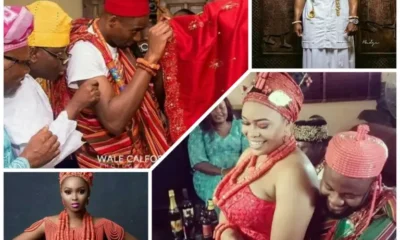
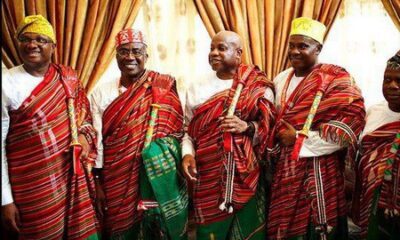
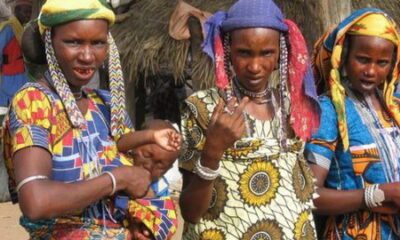
Traditional attire is worn for cultural events, with women often in patterned wrappers and beads, and men in embroidered shirts and wrappers for ceremonial occasions. Clothing and adornment reflect status, age, and occasion.
Everyday life, from farming to market activities is guided by these cultural norms, and shows how tradition shapes not only rituals but also social interaction and community cohesion. These practices keep the Annang identity strong and visible in modern times.
Arts, Crafts and Cultural Expression
The Annang people are known for their creativity which is expressed through arts, crafts, music, and performance. Traditional crafts are an important part of both daily life and ceremonial occasions.
One of the most famous Annang crafts is raffia weaving, especially in Ikot Ekpene. Skilled artisans produce mats, baskets, bags, and other woven items that are both functional and decorative. Patterns in these works often carry symbolic meaning or indicate the maker’s community or family lineage.
Wood carving is another key form of artistic expression. Annang carvers create masks, figurines, and ritual objects used in ceremonies and festivals. These carvings are valued not only for their aesthetic beauty but also for their cultural significance.
Music and dance are central to Annang cultural life. Drums, flutes, and other traditional instruments accompany dances and masquerade performances during festivals and social events. These performances often convey stories, celebrate community milestones, and preserve ancestral knowledge.
Proverbs, storytelling, and oral poetry are additional forms of artistic expression. They preserve history, teach moral lessons, and entertain. Together, these creative practices express the rich heritage of the Annang people and maintain cultural identity across generations.
Festivals and Cultural Celebrations

Festivals and cultural celebrations are central to the identity of the Annang people. They provide opportunities for communities to come together, honour their heritage, and celebrate life’s milestones.
One of the most prominent events is the Annang Festival of Arts and Culture held annually in Ikot Ekpene. The festival showcases traditional music, dance, masquerades, and crafts. It brings together people from across Annangland and beyond, and highlights the community’s history, values, and creativity.
Other celebrations include seasonal ceremonies connected to farming cycles, communal work achievements, and important rites of passage. Masquerades and performances are common as they symbolize ancestral spirits and cultural stories. Music and dance accompany these events as a way of strengthening social bonds and intergenerational knowledge.
These festivals do more than entertain. They strengthen cultural identity, educate the younger ones about their roots, and attract visitors that support local economies. For the Annang people, cultural celebrations are living expressions of history and community pride.
Economy and Traditional Occupations
The Annang people have traditionally relied on agriculture as the foundation of their economy. The fertile soil and favourable rainfall in their homeland support the cultivation of yams, cassava, plantains, and vegetables. Palm trees are also abundant, and the production of palm oil and palm kernel products has been a key economic activity for generations.
Farming was often complemented by trade. Annang communities exchanged agricultural produce, crafts, and other goods with neighbouring groups such as the Ibibio and Efik. Markets in towns like Ikot Ekpene became central hubs for commerce where raffia products, food items, and local crafts were sold and traded.
Craftsmanship remains an important occupation of the Annang people. Raffia weaving, wood carving, and basket-making provide income and preserve cultural skills. These crafts are also sold in wider Nigerian markets and occasionally exported, thus giving the people recognition for their artistry.
In modern times, many Annang people work in education, healthcare, business, civil service, and other professional sectors. While contemporary employment has diversified, farming, craftwork, and local trade continue to sustain families and maintain connections to traditional practices.
The combination of agriculture, craft, and trade shows how the Annang people balance their cultural heritage with economic adaptation with the aim of ensuring that their communities remain resilient and prosperous.
The Annang People in Modern Nigeria
The Annang people still play an important role in contemporary Nigeria. Education is highly valued, and many Annang children attend schools, colleges, and universities, both within Akwa Ibom State and in other parts of the country. This has opened opportunities in professions such as medicine, law, business, and government service.
Urban migration has also brought many Annang people to cities like Uyo, Port Harcourt, Lagos, and Abuja. Even while living in urban centres, they still maintain strong ties to their ancestral villages. Many return home for family events, festivals, and ceremonies as a way of keeping cultural traditions alive across generations.
Politically, the Annang people have representation in local and state governance. Community leaders and traditional councils continue to advise on matters of customary law, land, and cultural practices, with the aim of ensuring that heritage is preserved alongside modern governance structures.
Cultural preservation is another priority. Festivals, arts, language programmes, and storytelling initiatives help the younger people to understand and appreciate Annang history and values. In this way, the Annang people remain deeply connected to their roots, while actively contributing to Nigeria’s social, economic, and political life.
Modern Annang identity is, therefore, a balance between heritage and contemporary realities. This shows how a community can evolve while maintaining the practices, language, and values that define who they are.
Common Misconceptions About the Annang People
Despite their rich history and distinct identity, the Annang people are, sometimes, misunderstood or misrepresented. One common misconception is that they are the same as the Ibibio or Efik. While these groups share linguistic and cultural similarities, the Annang people have a unique language, customs, and ancestral history that distinguish them from their neighbours.
Another misunderstanding is about their language. Some assume Annang is simply a dialect of Ibibio, but it is a separate language with its own grammar, vocabulary, and oral literature. This distinction is important for cultural preservation and identity.
There is also a tendency to overlook the Annang’s contributions to commerce, arts, and governance in Nigeria. Their raffia craft, wood carving, and participation in trade and politics are often underrepresented in mainstream narratives.
By clarifying these points, it becomes clear that the Annang people are a distinct, culturally rich community whose history, language, and traditions deserve recognition and respect.
Why the Annang Identity is Still Relevant Today
The Annang people represent more than a group defined by language or geography. Their identity carries lessons about history, community, and continuity. In today’s Nigeria where modernization and urban migration challenge traditional ways of life, maintaining the Annang heritage helps to preserve a sense of belonging and shared memory.
Language, festivals, crafts, and rituals connect generations. They teach respect for elders, the value of cooperation, and the importance of cultural pride. For the younger Annang people growing up in cities or abroad, these traditions provide a link to their roots, and ground them in a history that informs their present and future.
Beyond internal community value, the Annang identity enriches Nigeria’s broader cultural landscape. Their art, music, masquerades, and storytelling contribute to national diversity, tourism, and creative industries. Recognizing and preserving the Annang heritage ensures that their contributions are not lost amid rapid social change.
In essence, the Annang identity is important today because it is a living record of human experience, a guide for community cohesion, and a vibrant part of Nigeria’s cultural richness. It reminds both the Annang people and outsiders that heritage informs who we are and how we relate to each other.
In Conclusion …
The Annang people are a vibrant and enduring community whose history, culture, and traditions continue to shape life in Akwa Ibom State and beyond. From their ancestral settlements and clan-based social structures to their language, festivals, arts, and spiritual practices, the Annang people maintain a strong sense of identity that links the past and the present.
While modern education, urban migration, and contemporary professions have introduced new ways of living, the Annang continue to honour their roots through language preservation, cultural celebrations, and community values. Their arts, crafts, and storytelling keep history alive, while their participation in Nigeria’s social, economic, and political life demonstrates adaptability and resilience.
More than learning about an ethnic group, understanding the Annang people is an opportunity to appreciate a culture that has survived centuries, contributed to national heritage, and continues to teach lessons about community, respect, and continuity. Preserving and celebrating the Annang identity ensures that their stories, values, and creative expressions remain a living part of Nigeria’s rich cultural mix.
References
- https://annangheritage.com/
- https://en.wikipedia.org/wiki/Anaang_people
- https://www.nairaland.com/4917315/annang-people-akwa-ibom-state
- https://news360ng.com/history-and-top-facts-to-know-about-annang-tribe-of-akwa-ibom-state/
- https://effiky.com/annang-people-origins-and-traditions/
- https://ajrcsunical.org/index.php/ajrcs/article/view/11
- https://nico.gov.ng/annang-festival-of-arts-and-culture/
- https://en.wikipedia.org/wiki/Anaang_language
You might want to check this out …