






Igbo Festivals
Importance of Igbo Festivals in Igbo Culture: Why They Still Matter Today

Igbo festivals remain central to the cultural identity, community life, spirituality, and traditions of Igbo people. Explore, among other things, why these celebrations still matter in Igbo society today.
Iri Ji Festival
Igbo festivals are an important part of Igbo culture and social life. They are traditional celebrations that mark significant moments such as harvest seasons, leadership renewal, and communal thanksgiving.
For generations, these festivals have helped to preserve customs, values, and shared identity among Igbo communities. Despite the influence of modern life, Igbo festivals still play meaningful roles in many towns and villages across southeastern Nigeria and among Igbo people in the diaspora.
Traditionally, festivals in Igbo society served practical, spiritual, and social purposes. They provided opportunities to thank the gods and ancestors for protection and abundance, strengthen community bonds, and pass cultural knowledge from one generation to another. Events such as the New Yam Festival, Ofala Festival, and various masquerade celebrations reflect the deep connection between Igbo people, their land, and their beliefs.
In recent times, changing lifestyles, urbanization, and religious influences have altered how some festivals are observed. However, this has not reduced their importance. Instead, many Igbo festivals have adapted to modern realities while retaining their cultural meaning. They remain platforms for cultural expression, social unity, and economic activity.
This article examines the importance of festivals in Igbo culture and explains why Igbo festivals still matter today. It explores their historical background, spiritual significance, social and economic roles, and their place in modern Igbo society.
What Igbo Festivals Are
Igbo festivals are traditional communal celebrations observed by Igbo communities to mark important cultural, social, and spiritual events. They are usually tied to agricultural cycles, religious beliefs, leadership traditions, and historical customs that have guided community life for generations. Through these festivals, Igbo people express gratitude, renew social bonds, and reaffirm shared values.
Most Igbo festivals follow a yearly cycle and are carefully timed according to local traditions. Some are linked to farming seasons, especially the harvest of yams which hold a central place in Igbo society. Others are associated with kingship, ancestral remembrance, or community protection.
Although specific practices may differ from one town to another, the purpose of Igbo festivals remains largely the same. They serve as moments for collective reflection, celebration, and cultural continuity.
Igbo festivals often involve a combination of rituals, music, dance, masquerade performances, and communal feasting. Elders, traditional leaders, and priests usually play key roles in guiding the ceremonies while the wider community participates through attendance and performance. These elements work together to create a shared experience that strengthens identity and reinforces cultural knowledge.
While modern influences have changed how some festivals are observed, the core meaning of Igbo festivals remains intact. They continue to function as living traditions that connect the past with the present and provide a sense of belonging for Igbo people at home and in the diaspora.
Historical Role of Festivals in Traditional Igbo Society
In traditional Igbo society, Igbo festivals played an essential role in organizing community life. Long before modern calendars and formal institutions, festivals helped people to understand time, seasons, and social responsibilities. They marked important periods in the farming year, especially planting and harvest seasons, and guided communal activities that affected survival and wellbeing.
Igbo festivals also served as platforms for teaching values and preserving social order. During festival periods, elders used public gatherings to pass down customs, laws, and moral expectations to younger members of the community. These occasions strenghtened respect for authority, age grades, and family structures. Through songs, storytelling, and ritual performances, history and cultural knowledge were shared in ways that were easy to remember.
Festivals were closely linked to leadership and governance in traditional Igbo communities. Some celebrations marked the installation of leaders, reaffirmed the authority of kings or elders, or renewed communal agreements. These events reminded the people of their collective responsibilities and the importance of unity and cooperation.
Beyond governance and agriculture, Igbo festivals helped to strengthen communal identity. By bringing everyone together at regular intervals, they created shared experiences that built trust and solidarity.
Participation in festivals reminded individuals that they were part of something larger than themselves. This sense of belonging was vital to maintaining peace, cooperation, and cultural continuity within the Igbo society.
Spiritual and Religious Significance
Igbo festivals are deeply connected to spiritual beliefs and religious practices in Igbo society. Traditionally, the Igbo worldview recognizes a close relationship between the physical world and the spiritual realm. Festivals provide opportunities for communities to honour this connection by offering gratitude, prayers, and sacrifices to deities, ancestors, and the supreme creator, Chukwu.
Many Igbo festivals are observed as acts of thanksgiving. They acknowledge the role of divine forces in protecting the community, ensuring successful harvests, and maintaining balance in human affairs. Rituals performed during these festivals are meant to restore harmony between people, nature, and the spiritual world. Elders and traditional priests often lead these ceremonies to ensure that customs are followed correctly.
Masquerade performances are a key spiritual element of many Igbo festivals. Masquerades are believed to represent ancestral spirits or spiritual beings. Their presence during festivals serves as a reminder of moral order and communal discipline. Through their performances, masquerades reinforce values such as respect, honesty, and responsibility.
Even in communities where Christianity has become dominant, the spiritual aspects of Igbo festivals continue to influence cultural practice. Some rituals have been modified or symbolically interpreted, but the underlying belief in gratitude, remembrance, and spiritual connection remains strong. As such, Igbo festivals serve as bridges between tradition, faith, and modern life.
Festivals as Tools for Cultural Identity and Continuity

Ofala Festival
Igbo festivals play a vital role in preserving cultural identity and ensuring continuity across generations. In a society where history and values were traditionally passed down through oral means, festivals served as living classrooms. Through repeated participation, younger members of the community learned customs, symbols, language, and social expectations in practical and memorable ways.
During Igbo festivals, cultural expressions such as traditional dress, music, dance, and folklore are brought to the spotlight. These elements help to strengthen a shared sense of identity. Songs sung during festivals often carry historical lessons or moral messages, while the dances and performances reflect community values and social roles. By taking part in these activities, individuals develop a deeper understanding of what it means to belong to the Igbo cultural space.
Festivals also help to maintain continuity by linking the present generation to the past. Rituals performed during festivals often follow patterns that have remained unchanged for decades or even centuries. This repetition creates a sense of stability and cultural grounding. It reminds participants that they are part of a long lineage with shared traditions and responsibilities.
In modern times, Igbo festivals continue to support cultural continuity even as lifestyles change. Many Igbo people who live in cities or abroad return home specifically for festival periods. This movement helps to keep cultural ties alive and ensures that traditions are not lost. Through these gatherings, Igbo festivals present powerful tools for sustaining identity in a rapidly changing world.
Social Importance in Igbo Communities
Igbo festivals play a central role in building and maintaining social bonds within communities. They bring together families, neighbours, and friends, and provide opportunities for people to reconnect and strengthen relationships. For many Igbo people, festivals are a time to return home from cities or even from abroad, thus fostering a sense of reunion and shared belonging.
During these celebrations, people engage in communal activities such as dancing, singing, and feasting. Elders, chiefs, and community leaders often use the occasion to address the public, settle disputes, and offer guidance. These gatherings encourage cooperation and reinforce the norms that keep the community functioning smoothly.
Festivals also serve as platforms for social recognition. Achievements, titles, and milestones are often celebrated during these periods. Individuals are honoured for their contributions, and young people learn the importance of respect, responsibility, and service to others.
Even in the modern era where urbanization and technology have changed how people interact, the social aspect of festivals remains strong. They continue to connect generations, strengthen kinship ties, and foster a sense of unity. By bringing people together in shared celebration, Igbo festivals help to maintain the social fabric of communities in ways that go far beyond entertainment.
Economic Importance
Igbo festivals are not only cultural and social events but also contribute significantly to local economies. During festival periods, markets and small businesses experience increased activity as people buy food, clothing, crafts, and other goods to prepare for celebrations. Artisans, musicians, and performers also benefit, as festival events provide opportunities for them to earn income while showcasing their skills.
Tourism is another important economic factor. Many Igbo festivals attract visitors from other regions and even from the diaspora. These visitors spend on accommodation, transportation, food, and cultural experiences that generate revenue for the host community. Some festivals have even become well-known tourist attractions that help towns and villages to gain recognition and economic growth.
Festivals also create indirect economic opportunities. Temporary stalls, transportation services, and local hospitality providers thrive during celebrations. The demand for traditional attire, food ingredients, and festival paraphernalia supports artisans and local producers. By combining culture with commerce, Igbo festivals help to sustain livelihoods while preserving tradition.
Even as modern festivals, sometimes, incorporate entertainment and commercial elements, their economic impact remains significant. They show how cultural heritage and economic activity can coexist to ensure that traditions remain vibrant and beneficial for communities.
Popular Igbo Festivals and Their Cultural Meanings

Masquerades Festival
Igbo festivals are diverse as they reflect the traditions, beliefs, and histories of different communities across southeastern Nigeria. Each festival carries a distinct cultural tone shaped by local customs, spiritual significance, and community priorities. While practices may differ, all Igbo festivals share the purpose of celebrating heritage, reinforcing social bonds, and honouring spiritual and ancestral traditions.
New Yam Festival
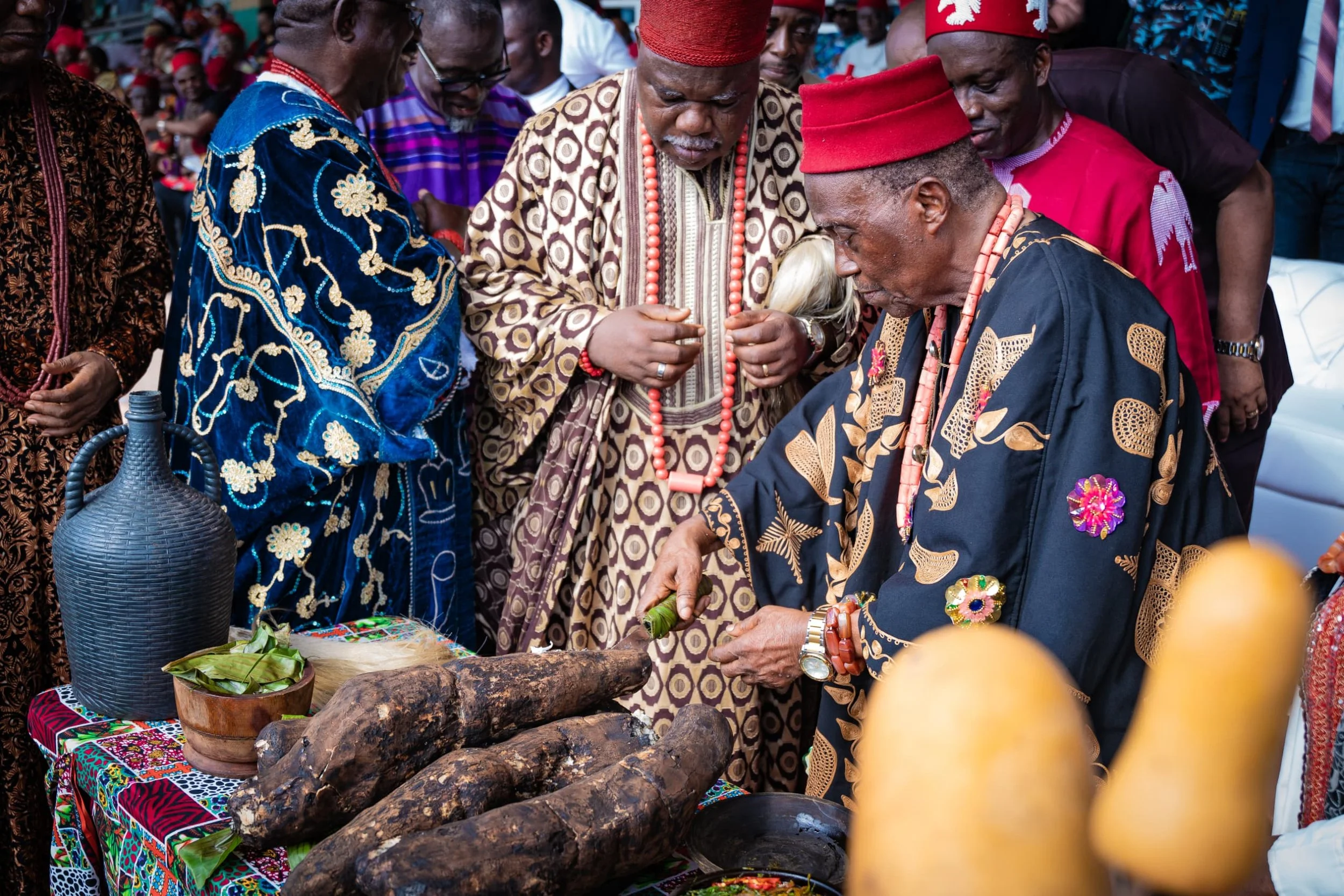
The New Yam Festival called Iri Ji or Iwa Ji is among the most widely celebrated Igbo festivals. It usually occurs between August and October, depending on the local harvest calendar. This festival marks the first harvest of yams, a crop central to Igbo life and often regarded as the “king of crops.”
Before people eat the new yams, they are first offered to the gods and ancestors as a sign of gratitude for a bountiful harvest. The festival includes feasting, traditional music, dancing, and communal ceremonies.
In some communities, the New Yam Festival has a solemn spiritual tone that emphasizes thanksgiving to deities, while in others, it is more joyous, featuring public performances, events and vibrant dances.
Ofala Festival
The Ofala Festival is a celebration of kingship and leadership, particularly in Onitsha, Nnewi and other Igbo towns. The festival honours the Obi or Igwe and marks the renewal of his authority and responsibilities to the community.
During the festival, the king appears in elaborate ceremonial attire, accompanied by drumming, dancing, and traditional rituals. While the public display is grand and festive, the spiritual aspect emphasizes continuity, ancestral blessings, and communal unity.
Different communities infuse the festival with their own local customs, thus giving each Ofala Festival a unique rhythm and character.
Ikeji Festival
The Ikeji Festival is a major harvest and cultural festival, especially in Arondizuogu, Imo State. It combines spiritual, social, and entertainment elements. Central to the festival are masquerade performances, dances, and communal feasting.
Ikeji serves both as a thanksgiving for harvests and as a display of cultural pride. While some communities emphasize the ritual and ancestral homage, others highlight the social and performative aspects which invite participants and tourists to enjoy colourful displays and competitions.
Masquerade Festivals
Masquerade festivals are a distinctive feature of Igbo culture. Known as Mmanwu, they are performed in many communities across Igboland and vary widely in tone and purpose.
Masquerades often represent ancestral spirits or moral forces and may perform roles ranging from entertainment to social enforcement. Some masquerade festivals are solemn and sacred, performed primarily for spiritual purposes and seen as intermediaries between the living and the dead.
Others are celebratory, incorporating dance, music, and humour to engage the community. The tone, timing, and significance of masquerade festivals differ from town to town. This highlights the rich diversity within Igbo cultural practice.
Iwa Akwa
Iwa Akwa is a festival that celebrates maturity and social achievement. Traditionally, it marks the transition of young men or women into adulthood or recognizes individuals who have attained social titles.
In some communities, Iwa Akwa has a formal and ritualistic tone, with ancestral blessings, prayers, and ceremonial dress. In others, it is a more festive, communal occasion with music, dance, and public recognition.
The festival underscores the importance of social responsibility, respect for tradition, and recognition of personal growth within the Igbo community.
Local Variations
Across Igboland, even festivals with the same name can have different expressions. For example, the New Yam Festival in Onitsha or Nnewi may involve elaborate palace ceremonies, while in smaller villages it may focus more on communal feasting and ritual offerings.
Masquerade performances in one town may emphasize moral instruction, while in another they highlight entertainment and artistic skill. These variations reflect the adaptability of Igbo festivals and their ability to express both shared values and local identity.
In all cases, participation in Igbo festivals allows the younger generations to witness and experience traditions firsthand. This hands-on engagement ensures that customs, moral lessons, and communal values continue to be passed down, thereby preserving the cultural richness of Igboland.
Christianity, Modernity, and Changing Attitudes
Igbo festivals have adapted over time as Christianity, urbanization, and modern lifestyles have influenced the society. While some people once viewed traditional festivals as purely spiritual or even “pagan,” most communities today recognize that they can coexist with modern faith and life practices. Many Igbo festivals now include elements of Christian prayers or thanksgiving services without losing their traditional meaning.
Modern life has also changed how people participate in festivals. Urbanization and migration mean that many young people live far from their ancestral homes. Even so, major Igbo festivals continue to draw people back to their communities as a way of maintaining family and social ties. Social media and digital communication have also allowed diaspora communities to follow and celebrate festivals virtually, thus helping traditions remain relevant across distances.
Despite these changes, the core purpose of Igbo festivals remains intact. They continue to express gratitude, preserve cultural knowledge, and strengthen communal bonds. Some festivals have taken on a more celebratory and performative tone in urban centres by focusing on music, dance, and cultural displays, while rural communities may emphasize ritual, ancestral veneration, and moral instruction. This adaptability allows Igbo festivals to remain meaningful in bridging the gap between tradition and modernity.
In essence, Igbo festivals connect generations, reinforce identity, and serve as living expressions of culture, even as the world around them changes. Their enduring relevance demonstrates the flexibility and resilience of Igbo cultural practices.
Why Igbo Festivals Still Matter Today

Iwa Akwa Festival
Igbo festivals remain important in modern society because they connect people to their history, community, and cultural identity. Even with urbanization, technology, and changing lifestyles, these festivals provide meaning, purpose, and a sense of belonging. They remind people of shared values such as gratitude, hard work, respect, and unity.
One key reason Igbo festivals matter today is their role in preserving cultural knowledge. Through music, dance, storytelling, and ritual, the younger generations learn about customs, morals, and traditions in ways that are interactive and memorable. These experiences cannot be fully captured in books or online media which make festival participation a vital method of cultural education.
Igbo festivals also foster social cohesion. They bring family members, friends, and neighbours together. Even for those living far from their hometowns, returning for festivals allows them to reconnect with heritage and kin. In addition, festivals create opportunities for public recognition, communal support, and shared celebration.
Economically, festivals remain significant. They boost local markets, encourage entrepreneurship, and attract tourism that benefit communities while keeping traditions alive. Culturally, they serve as platforms for showcasing art, music, fashion, and craftsmanship which help communities maintain pride in their heritage.
Ultimately, Igbo festivals matter because they are living traditions that bridge the past and present. They celebrate life, connect people to their roots, and ensure that the richness of Igbo culture continues to thrive, even in a modern world.
Challenges Facing Traditional Festivals
Despite their importance, Igbo festivals face several challenges in the modern era. Urbanization and migration have caused many young people to live far from their ancestral communities. As a result, participation in festivals can be limited, thus reducing the direct transmission of cultural knowledge from elders to younger generations.
Another challenge is the influence of modern religion, particularly Christianity in some communities. While many Igbo festivals have adapted to include Christian elements, misconceptions about traditional rituals can lead some people to view them as outdated or irrelevant. This perception, sometimes, discourages full participation, especially among the younger members of the community.
Commercialization also presents a challenge. In some areas, festivals are increasingly focused on entertainment and tourism rather than cultural meaning. While this generates economic benefits, it can dilute the spiritual and moral significance of the events, and shift attention away from traditional values and rituals.
Finally, globalization and changing lifestyles have altered how festivals are experienced. Fast-paced urban life, technology, and media distractions can reduce community engagement and weaken the communal atmosphere that is central to Igbo festivals. If these challenges are not addressed, there is a risk that some traditions and practices could be lost over time.
Despite these obstacles, many communities continue to adapt as a way of ensuring that Igbo festivals remain relevant and meaningful for both the present and future generations.
The Future of Festivals in Igbo Culture
The future of Igbo festivals depends on the careful balance between tradition and modernity. As communities continue to change, festivals must adapt while retaining their cultural, spiritual, and social significance. Technology, media, and social networks offer new ways to share festival experiences in a way that connect people in cities and diaspora communities to traditions in their ancestral towns.
Education is also critical for the survival of Igbo festivals. Schools, families, and cultural organizations can teach the meaning behind each festival to ensure that young people understand the history, rituals, and values involved. Documentation, storytelling, and guided participation help to preserve knowledge that might otherwise be lost.
Despite challenges, there are reasons for optimism. Many communities are now finding creative ways to make festivals engaging for younger generations by combining traditional rituals with performances, music, and visual arts. Diaspora participation, cultural tourism, and community initiatives are also helping to sustain interest and relevance.
Ultimately, the future of Igbo festivals lies in their ability to remain living traditions. By adapting to modern life while preserving core values, festivals can continue to educate, unite, and inspire communities, thus ensuring that Igbo culture remains vibrant for generations to come.
In Conclusion …
Igbo festivals are living expressions of culture, spirituality, and community that preserve traditions, strengthen social bonds, and connect generations in ways that textbooks and media cannot replicate. From the New Yam Festival to Ofala, Ikeji, masquerade festivals, and Iwa Akwa, each event carries unique meaning even as it reflects shared values of gratitude, unity, and respect.
Even as modern life brings challenges such as urbanization, migration, and commercialization, Igbo festivals continue to adapt without losing their cultural essence. They remain important platforms for teaching customs, celebrating achievements, and fostering identity. Through participation in these festivals, the younger generations learn the stories, morals, and rituals that define Igbo heritage.
Today, Igbo festivals still matter because they bridge the past and present. They celebrate life, preserve cultural richness, and ensure that communities remain connected across time and space. By embracing both tradition and innovation, Igbo festivals will continue to thrive in keeping the spirit of Igbo culture alive for generations to come.
References
- https://www.igboamaka.ca/festivals
- https://scrollforth.ng/important-festivals-in-igbo-culture
- https://en.wikipedia.org/wiki/New_Yam_Festival_of_the_Igbo
- https://guardian.ng/life/iwa-ji-the-new-yam-festival-in-igbo-land/
- https://en.wikipedia.org/wiki/Ofala_Festival
- https://en.wikipedia.org/wiki/Ikeji_festival
- https://nnewicity.com/iwa-akwa-an-igbo-rite-of-passage-and-cultural-heritage/
- https://nnewicity.com/owu-festival-igboland-heritage-masquerades-tradition/