




Biographies & Personalities
Dr. Dozie Ikedife: A Lasting Legacy of Medical Practice and Cultural Leadership

Dozie Ikedife was a Nigerian medical doctor, community leader, and former President-General of Ohanaeze Ndigbo. Learn about his life, medical career, leadership, and legacy in Igbo history.

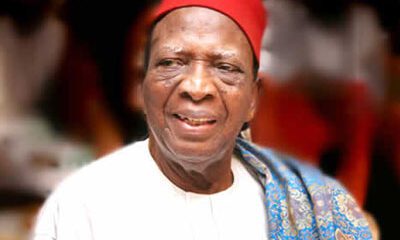
Dr. Dozie Ikedife lived a life that moved between two demanding worlds, medicine and cultural leadership, and he held both with uncommon steadiness. In Nnewi where his journey began, he grew into a medical doctor whose name carried weight in obstetrics and gynecology. But beyond the hospital walls, his voice also found space in the larger story of Igbo identity, unity, and representation in Nigeria.
His path was not a simple professional biography. It stretched from years of medical training in Nigeria and the United Kingdom to decades of practice at home, and later, into leadership as President-General of Ohanaeze Ndigbo.
Along the way, Dozie Ikedife became known as someone who understood both individual care and collective responsibility. He treated patients in clinics, and also engaged in conversations that shaped how a people saw themselves in a changing nation.
This biography and legacy of Dozie Ikedife explores that full journey, his medical practice, his cultural leadership, and the mark he left on Igbo history.
Dr. Dozie Ikedife’s Early Life and Background
Dr. Dozie Ikedife was born on 24 August 1932 in Nnewi, Anambra State, a town in southeastern Nigeria widely known for its strong tradition of enterprise, discipline, and community identity. He grew up in a period colonial influence and indigenous Igbo culture existed side by side, and this environment quietly shaped the values he would carry throughout his life.
His early education began in Nnewi at Nnewi Central School where he first developed a strong academic foundation. From there, he moved to Dennis Memorial Grammar School, Onitsha, one of the respected schools in Eastern Nigeria at the time. It was during these formative years that his interest in science and structured learning became more visible.
Life in pre-independence Nigeria meant that opportunities were limited and highly competitive. For the young Ikedife, education was not just about personal progress. It was seen as a responsibility, a way to contribute meaningfully to society. That mindset stayed with him as he advanced in his studies and later pursued a career in medicine.
His upbringing in Nnewi also played an important role. The community’s emphasis on hard work, respect for knowledge, and service to others helped to build the foundation for his later roles in both medical practice and cultural leadership.
Further Education and Medical Training
The educational path of Dr. Dozie Ikedife reflects persistence, discipline, and a steady rise through some of the most respected academic institutions of his time. After his early schooling in Eastern Nigeria, he moved beyond the country to pursue medical training. That step placed him among a small group of Nigerians who studied medicine abroad in the mid-20th century.
He continued his studies in the United Kingdom by attending City College Norwich where he strengthened his scientific foundation before progressing into full medical training. From there, he went on to the University of Glasgow in Scotland where he studied Medicine and Surgery in the 1950s. This period marked a major turning point in his life, as he transitioned from a promising student into a future medical professional.
His training was not limited to classroom learning. He also gained exposure to clinical practice in the UK medical system which at the time was one of the most structured in the world. This experience helped him to develop a strong clinical discipline, especially in patient care and medical ethics.
Later in his medical training journey, he also engaged with the University of London (external programme), which further strengthened his academic credentials. He went on to earn specialist qualifications in obstetrics, including training under the Royal College of Obstetricians and Gynaecologists where he obtained a diploma and later, became a fellow.
This combination of academic study and professional certification positioned Dr. Dozie Ikedife as a highly trained obstetrician and gynecologist at a time Nigeria had very few specialists in that field. His education was not only personal achievement, it was also part of a broader contribution to the growth of modern medical practice in Nigeria.
Medical Career and Professional Practice

When Dozie Ikedife returned to Nigeria after years of medical training in the United Kingdom, he stepped into a healthcare system that was still developing and often stretched beyond capacity. He chose to settle in Nnewi to begin what would become a long and respected medical practice in obstetrics and gynecology.
His work focused mainly on women’s health, particularly childbirth and reproductive medicine. In a period specialist care was not widely available in many parts of Eastern Nigeria, his presence made a real difference. Patients often came from surrounding towns to seek treatment, relying on both his training and his reputation for careful, steady medical attention.
Over time, Dozie Ikedife built a private practice that served generations of families. He was known for maintaining a disciplined approach to medicine by paying close attention to diagnosis, treatment, and patient care. Many who worked with him or were treated by him described him as calm, methodical, and committed to doing things properly, even in challenging conditions.
Beyond individual practice, he also contributed to the broader medical community. He mentored younger doctors and supported the growth of medical standards in his region. His career represented a bridge between earlier, less structured healthcare systems and a more modern approach to medical professionalism in Nigeria.
His contributions did not go unnoticed. The Nigerian Medical Association and other professional bodies later acknowledged his long service and dedication to medicine. He was often described as one of the respected figures in his field, not just for his technical expertise but also for his consistency over several decades of practice.
Through his medical career, Dozie Ikedife established a foundation of trust in healthcare delivery within his community. That foundation later followed him into his public and cultural leadership roles where his reputation as a doctor added weight to his voice in wider national conversations.
Role During the Nigerian Civil War Era
The period of the Nigerian Civil War was one of the most difficult chapters in the country’s history, especially for the eastern region. For professionals like Dozie Ikedife who was already trained in medicine at the time, it was also a period that tested both skill and endurance.
During this era, medical practitioners in the eastern region were confronted with urgent and overwhelming healthcare needs. Hospitals and clinics operated under pressure, and doctors had to respond quickly to large numbers of injured and displaced people. Dozie Ikedife, like many of his contemporaries continued his medical service in this environment, and contributed to the broader humanitarian response of the time.
While detailed personal records of his day-to-day wartime activities are limited in public archives, it is well documented that he was part of the generation of physicians who remained active in Eastern Nigeria during and after the conflict. Their work focused largely on sustaining medical care under constrained conditions and supporting communities affected by the war.
This experience added another layer to his professional life. It exposed him to the realities of public health challenges beyond routine clinical practice. It also strengthened his understanding of service, resilience, and the importance of structured healthcare systems in times of crisis.
For Dr. Dozie Ikedife, the civil war period was not defined by public recognition or political position, it was defined by the quiet responsibility of medical service during instability. That experience later influenced how he engaged with broader issues of community leadership and national dialogue.
Entry into Leadership and Public Life
After years of building a strong reputation in medical practice, Dozie Ikedife gradually moved into public service and community leadership. His transition was not sudden. It grew naturally from his standing as a respected physician in Nnewi and his increasing involvement in civic discussions within the Igbo community.
He became known as someone whose opinions carried weight, especially on issues affecting development, governance, and regional representation. Over time, this visibility led him into more structured public roles where his voice extended beyond the consulting room and into broader national conversations.
One notable stage in his public career was his role as a Presidential Liaison Officer during Nigeria’s Second Republic (1979–1983). In this capacity, he served as a bridge between regional interests and federal government engagement. This position placed him within the administrative and political environment of the time, and allowed him to contribute to dialogue on governance and national development.
His entry into leadership was also defined by his involvement in Igbo socio-cultural matters. He participated in discussions around unity, representation, and the place of the Igbo people within Nigeria’s evolving political structure. These engagements gradually positioned him as a trusted voice within community leadership circles.
Unlike his medical career which was clinical and structured, his public life required negotiation, dialogue, and a broader understanding of social dynamics. Dozie Ikedife adapted to this shift by drawing on his experience, discipline, and calm approach to problem-solving.
This stage of his life marked an important turning point, as it moved him from being primarily a medical professional to becoming a public figure whose influence extended into cultural and political discussions within Igbo society.
Leadership in Ohanaeze Ndigbo

One of the most defining chapters in the public life of Dr. Dozie Ikedife was his leadership role in Ohanaeze Ndigbo, the foremost socio-cultural organization representing the Igbo people of Nigeria. His emergence in this position placed him at the centre of conversations about identity, unity, and political representation for his people.
As President-General of Ohanaeze Ndigbo, Ikedife carried the responsibility of speaking for a diverse and widely distributed community. The role required careful balance, especially in a country where ethnic identity often intersects with national politics. His approach was measured and grounded in dialogue, with a focus on unity and structured engagement.
During his tenure, he was involved in advocacy for fair representation of the Igbo people within Nigeria’s political system. He also participated in national discussions on restructuring, equity, and inclusion, often presenting the concerns of his community in formal and informal forums.
His leadership style was influenced by his background in medicine. He was known for being calm, deliberate, and detail-oriented in his communication. Rather than adopting confrontational methods, he preferred structured engagement and negotiation, especially when addressing sensitive national issues.
Under his leadership, Ohanaeze Ndigbo continued to function as a key platform for cultural preservation and political dialogue. The organization worked to maintain Igbo identity while also engaging with broader national concerns. Ikedife’s role in this process helped to strengthen its visibility and relevance during a period of evolving political discourse in Nigeria.
His time in Ohanaeze Ndigbo remains one of the most referenced aspects of his public service, as it placed him directly in the intersection of culture, politics, and identity within the Igbo community.
Cultural Leadership and Igbo Identity Advocacy
Beyond formal titles and organizational roles, Dozie Ikedife also played a steady part in promoting Igbo cultural identity and community consciousness. His approach to cultural leadership was not loud or performative. It was grounded in consistent engagement with ideas about unity, respect for tradition, and the place of the Igbo people within Nigeria’s wider national structure.
Through his involvement in Ohanaeze Ndigbo and other public platforms, he often contributed to conversations around identity and belonging. He believed that cultural identity was not only preserved through language and tradition but also through responsible leadership and collective awareness of history.
A recurring theme in his public contributions was the need for Igbo unity. Dozie Ikedife often emphasized that internal cohesion was important for meaningful participation in national discussions. This perspective informed many of his positions during his years in public life.
He also supported efforts to keep Igbo cultural values visible in a rapidly changing society. This included respect for traditional institutions, encouragement of community engagement, and recognition of the importance of heritage in shaping future generations.
Unlike some cultural advocates who focus primarily on symbolism, Dozie Ikedife often approached identity from a practical angle. For him, cultural leadership was closely linked to responsibility, organization, and participation in civic life. This view made his contributions feel more grounded in everyday realities rather than abstract ideals.
Over time, his name became associated not only with medicine and leadership but also with a thoughtful approach to Igbo identity discussions. His work helped to keep cultural conversations active during periods national attention was often focused elsewhere.
Public Perception and Legacy
The public image of Dozie Ikedife was shaped by two major parts of his life, his long medical career and his later role in Igbo leadership. Together, they created a legacy that people often describe as steady, disciplined, and service-driven, rather than politically aggressive or attention-seeking.
In medical circles, he was widely respected as a dedicated obstetrician and gynecologist who spent decades serving patients in Nnewi and surrounding communities. Many viewed him as part of the generation of doctors who helped to lay the foundation for modern specialist practice in Eastern Nigeria. His long service in healthcare earned him recognition from professional bodies, including the Nigerian Medical Association which described him as a significant figure in medical practice.
In public life, especially within Igbo socio-cultural discussions, his perception was more complex but still largely respectful. As President-General of Ohanaeze Ndigbo, Dozie Ikedife became a recognizable voice in conversations about Igbo unity, representation, and national inclusion. Supporters saw him as someone who spoke calmly and consistently on behalf of his people, often choosing structured dialogue over confrontation.
At the same time, like many public figures involved in ethnic and political advocacy, his positions were sometimes interpreted differently, depending on political perspectives. Even so, he remained a consistent participant in national conversations about identity and fairness in Nigeria.
After his passing in December 2018, tributes came from across different sectors, including government officials, medical professionals, and cultural organizations. These tributes often highlighted the same themes – long service, professionalism, and commitment to community life.
His legacy is not defined by a single achievement, rather by the combination of roles he played over time. As a medical doctor, he contributed to healthcare development at a community level. As a cultural leader, he participated in shaping discussions about Igbo identity and representation in Nigeria.
Today, Dr. Dozie Ikedife is remembered as a figure who moved between medicine and public service with consistency. His life continues to be referenced in conversations about leadership, cultural advocacy, and the role of professionals in public life.
Death and National Reflection
Dr. Dozie Ikedife passed away on 11 December 2018 in Nnewi, Anambra State, at the age of 86. His death marked the end of a long and active life that stretched across medicine, public service, and cultural leadership.
News of his passing was received with attention across Nigeria, especially within the Igbo community and medical circles. For many, it was the loss of a familiar figure who had remained present in both professional and cultural discussions for decades. Tributes began to emerge almost immediately from individuals and institutions who had encountered him in different phases of his life.
The Nigerian Medical Association and several colleagues in the medical field described Dr. Dozie Ikedife as a committed physician who spent decades in obstetric and gynecological practice. They highlighted his consistency in service and his contribution to the development of specialist medicine in Eastern Nigeria.
In political and cultural spaces, especially within Igbo socio-cultural organizations, he was remembered for his time as President-General of Ohanaeze Ndigbo. Leaders and community members reflected on his role in representing Igbo interests during important national conversations and his steady participation in advocacy for inclusion and fairness.
His burial in Nnewi was attended by family members, community leaders, and representatives from different sectors of society. The event became not only a farewell but also a moment of reflection on a life that combined professional service with public engagement.
Beyond formal tributes, his passing also prompted broader reflection on the kind of leadership he represented. Many saw him as part of a generation that valued education, professional discipline, and community responsibility. His life encouraged conversations about how medical professionals can also contribute meaningfully to cultural and civic life.
In the end, the death of Dozie Ikedife was not only reported as the loss of a person but also as the closing of a chapter in Igbo medical and cultural history.
Why Dozie Ikedife’s Legacy is Still Remembered Today
The life of Dozie Ikedife continues to matter today because it sits at the intersection of three areas that still shape modern Nigerian society, namely, healthcare, cultural identity, and civic leadership. His story is not locked in the past. It still speaks to present questions about responsibility, representation, and professional service.
In medicine, the legacy of Dozie Ikedife reminds us of a generation of doctors who built careers under difficult conditions, yet, remained committed to long-term patient care. As a specialist in obstetrics and gynecology, he served communities where access to advanced healthcare was limited. His work reflected the importance of consistency, patience, and professional discipline in medical practice. For younger medical professionals, his life is a reference point for what sustained service can look like over decades.
In cultural leadership, Dozie Ikedife remains relevant because of his role in Ohanaeze Ndigbo and his involvement in conversations about Igbo unity and representation. His leadership came at a time Nigeria was navigating questions of inclusion and identity. Even today, those discussions have not gone away. His approach which leaned toward structured dialogue and community engagement continues to be referenced in debates about how ethnic groups can engage constructively within a diverse nation.
His legacy also matters in the broader conversation about professionals stepping into public service. He moved from medicine into leadership without abandoning his professional identity. Instead, he carried the discipline of his medical background into public life. This combination is still relevant today, especially in societies where leadership often benefits from technical knowledge and real-world experience.
There is also a deeper layer to his legacy. It is the idea that identity and service are not separate. For Dozie Ikedife, being a medical doctor and being an Igbo leader were not conflicting roles. They were part of a continuous commitment to people, whether at the level of individual care or community representation.
Today, as Nigeria continues to deal with questions around unity, governance, and development, his life offers a quiet reminder that leadership can take many forms. It can begin in a hospital room and extend into national conversations. It can be steady, patient, and rooted in service rather than visibility.
For these reasons, the story of Dozie Ikedife is remembered today. It is not just history. It is a lens through which we can still think about leadership, identity, and responsibility in a changing society.
Conclusion …
The life of Dozie Ikedife brings together two worlds that are often treated separately – professional service and cultural leadership. In his case, they moved side by side for decades. One began in the hospital where he worked as a medical doctor committed to women’s health and clinical care. The other unfolded in public life where he became a voice in Igbo leadership and national conversations about identity and inclusion.
From his early education in Nnewi to his medical training in the United Kingdom, and later his long years of practice in Nigeria, Dozie Ikedife’s journey shows a steady commitment to learning and service. Medicine gave him structure and discipline. Public life gave him a broader platform to engage with community concerns.
As President-General of Ohanaeze Ndigbo, he stepped into a role that required balance, communication, and a deep understanding of cultural responsibility. He did not abandon his medical identity. Instead, he carried it into leadership where careful thinking and patience became part of how he approached public issues.
What stands out most in the story of Dozie Ikedife is not only the positions he held, it is also the consistency of his engagement across different stages of life. He remained active in service, whether in clinical practice or in cultural advocacy, and his contributions continued well into his later years.
Today, his legacy sits within Igbo history as a reminder that leadership can be built through steady work, professional commitment, and a willingness to serve beyond personal boundaries. His life remains a reference point for how knowledge, identity, and responsibility can come together in one long journey of service.
References
- https://nigeriagenealogy.ng/getperson.php?personID=I3676&tree=igbo
- https://www.thisdaylive.com/2019/12/20/honouring-the-memory-of-an-excellent-medical-doctor-humanitarian/
- https://www.vanguardngr.com/2018/12/ndigbo-buhari-mourn-as-former-ohanaeze-leader-ikedife-dies-88/
- https://www.vanguardngr.com/2019/12/former-ohaneze-ndigbo-pg-ikedife-remembered-one-year-after/
You may want to check this out …